References · powerlifting
Powerlifting programming: the evidence
MVIII's powerlifting program stands on firm ground for load, periodization and rest, which grade A to B on meta-analyses of randomised trials. It stands on thinner ground for tapering, specificity and accessory work, which lean on small trials and practice surveys. A 2020 review of peaking says plainly that evidence for strength athletes is lacking.
Is powerlifting research as strong as general strength research?
No. Load, periodization and rest are graded A to B. Tapering, specificity and accessory work lean on small trials and practice surveys.
Entries by grade: A 4, B 9, C 14, none located 3. What the grades mean.
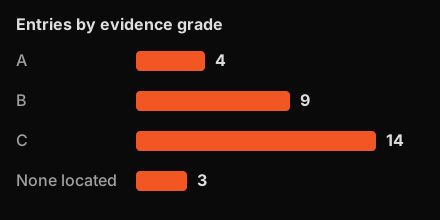
Grades are not uniform across this document. The load, periodization, and rest entries rest on randomised-trial meta-analyses and grade A–B. But powerlifting-specific evidence is thinner than general resistance-training evidence: the taper, specificity, and accessory-work entries lean on small trials and practice surveys and grade C. The technique entries (PL-T-*) are acute biomechanics and describe mechanical demand, not proven 1RM outcomes. The injury entries (PL-I-*) are retrospective and cross-sectional epidemiology. A 2020 review of peaking for powerlifting states plainly that evidence for strength and power athletes "is lacking" and that practitioners must often use trial and error rather than an evidence-based protocol [16] — that assessment still frames much of Part A below.
What the app prescribes
— Part A (Programming)
| id | variable | unit | min | default | max | evidence_grade | applies_to | source_ids |
|---|---|---|---|---|---|---|---|---|
| PL-P-01 | Top-set intensity | % 1RM | 80 | 85 | 100 | A | trained | 1,3,4,5 |
| PL-P-01b | Volume-work intensity | % 1RM | 70 | 75 | 85 | A | trained | 1,3,15 |
| PL-P-02 | Weekly volume per lift | hard sets/lift/wk | 4 | 10 | 20 | B derived | trained | 1,2,5 |
| PL-P-03 | Sessions per week | sessions/wk | 3 | 4 | 6 | B | trained | 1,2,6,20 |
| PL-P-03b | Competition squat frequency | ×/wk | 1 | 1.5 | 3 | C | competitive PL | 20 |
| PL-P-03c | Competition bench frequency | ×/wk | 1 | 2.5 | 4 | C | competitive PL | 6,20 |
| PL-P-03d | Competition deadlift frequency | ×/wk | 1 | 1.5 | 2 | C | competitive PL | 20 |
| PL-P-04 | Variation work | ×/wk per lift | 0 | 1.5 | 2.5 | C | competitive PL | 20,21 |
| PL-P-05 | Proximity to failure | RIR | 1 | 2 | 4 | A | trained | 7,8,9 |
| PL-P-06 | Inter-set rest | seconds | 120 | 210 | 300 | B | trained | 10,15 |
| PL-P-07 | Periodization model | qualitative | linear | undulating | block | A | trained | 11,12 |
| PL-P-08 | Load prescription method | qualitative | %-based | either | autoregulated | B | trained | 13 |
| PL-P-09 | Velocity loss threshold | % velocity loss | 15 | 20 | 25 | B contested | trained | 13,14,15 |
| PL-P-10 | Taper length | days | 5 | 9 | 14 | C | competitive PL | 17,18,19 |
| PL-P-10b | Taper volume reduction | % of peak volume | 40 | 42 | 45 | C | competitive PL | 19 |
| PL-P-10c | Training cessation | days | 1.5 | 2 | 4 | C | competitive PL | 18,19 |
| PL-P-10d | Last heavy deadlift | days out | 6 | 7 | 8 | C | competitive PL | 19 |
| PL-P-10e | Last heavy squat | days out | 5 | 6 | 6.5 | C | competitive PL | 19 |
| PL-P-10f | Last heavy bench | days out | 3 | 4 | 5 | C | competitive PL | 19 |
| PL-P-10g | Peak volume timing | weeks out | 4 | 5 | 6 | C | competitive PL | 19 |
| PL-P-10h | Peak intensity timing | weeks out | 2 | 2.5 | 3 | C | competitive PL | 19 |
| PL-P-11 | Overreach before taper | weeks | 0 | 1 | 1 | C | competitive PL | 17,18 |
| PL-P-12 | Repetition duration | seconds/rep | 0.5 | 2 | 8 | B | trained | 23,24 |
| PL-P-13 | Sex modifier | multiplier | 1.0 | 1.0 | 1.0 | B | young–middle-aged adults | 26 |
Notes on defaults. PL-P-02 is marked derived — no study prescribes a weekly set count for powerlifters; the band interpolates the diminishing-returns curve in [2] and the multi-set superiority in [1]. PL-P-03b/c/d defaults are survey medians of practice [20], not efficacy findings. All PL-P-10* rows come from self-reported practice [19] plus two small trials [17][18]. PL-P-09 is flagged contested — [13] and [14] disagree on whether the threshold affects 1RM at all.
Structured Parameter Table — Part B (Nutrition)
| id | variable | unit | min | default | max | evidence_grade | applies_to | source_ids |
|---|---|---|---|---|---|---|---|---|
| PL-N-01 | Daily protein (maintenance) | g/kg body weight/day | 1.4 | 1.6 | 2.0 | A | trained adults | 27,28,29,30 |
| PL-N-02 | Protein per meal | g/kg body mass/dose | 0.25 | 0.30 | 0.40 | B | trained adults | 30,31 |
| PL-N-02b | Meal spacing | hours | 3 | 3.5 | 4 | B | trained adults | 30,31 |
| PL-N-03 | Rate of weight loss | % body weight/wk | 0.5 | 0.7 | 1.0 | B | lean trained athletes | 32,33 |
| PL-N-03b | Daily protein (cutting) | g/kg fat-free mass/day | 2.3 | 2.6 | 3.1 | B | lean trained adults | 30,32,34 |
| PL-N-03c | Carbohydrate floor (cutting) | g/kg/day | 3.0 | 3.5 | 4.0 | C | combat-sport evidence | 36 |
| PL-N-03d | Fat floor (cutting) | g/kg/day | 0.5 | 0.75 | 1.0 | C | combat-sport evidence | 36 |
| PL-N-03e | Off-season margin above class | % above division | 12 | 13 | 15 | C | combat-sport evidence | 36 |
| PL-N-04 | Carbohydrate (glycogen maximising) | g/kg/day | 8 | 10 | 12 | C | athletes | 31,35 |
| PL-N-05 | Meet-day fuelling | — | — | not established | — | — | — | none |
Note. PL-N-03c/d/e are drawn from a combat-sports position stand and are marked as such — see the caveat in PL-N-03 about the weigh-in-to-competition window.
The entries
PL-P-01Load / intensity
PrescriptionTrain the competition lifts at >80% 1RM for top-end work; 70–85% 1RM for the bulk of volume. Heavy loading is the single most important variable for 1RM.
Evidence gradeA
EffectIn a Bayesian network meta-analysis of 178 studies (n = 5097, 45% women), higher-load (>80% 1RM) prescriptions maximised strength gains, and the highest-ranked prescription overall was higher-load, multi-set, thrice-weekly training (SMD 1.60, 95% CrI 1.38–1.82 vs non-exercise control). Threshold analysis showed these results were "extremely robust" [1]. Across 21 studies, 1RM gains significantly favoured high load (>60% 1RM) over low load (≤60% 1RM) even when all sets went to failure [3]. An earlier meta-analysis found a strength ES of 2.30 ± 0.43 for high load vs 1.23 ± 0.43 for low load (difference 1.07 ± 0.60, p = 0.09) [4]. An umbrella review of 44 systematic reviews found load among the variables with the most consistent evidence for strength (6/8 reviews providing some or sufficient evidence) [5].
PopulationHealthy adults, trained and untrained.
Caveats[4]'s difference did not reach significance (p = 0.09), attributed by the authors to few studies. Velocity-based work suggests 70–80% 1RM as the effective band when velocity loss is also controlled [15] — the two are not in conflict, since VBT sets are terminated by velocity rather than by reps to failure.
PL-P-02Weekly volume
PrescriptionStrength improves with more weekly sets, but with considerably more pronounced diminishing returns than hypertrophy. Multi-set is clearly better than single-set; beyond that, added volume buys progressively less.
Evidence gradeB
EffectMulti-level meta-regression across 67 studies / 2058 participants: the posterior probability that the volume→strength slope exceeds zero was 100%, but the best-fit model showed diminishing returns that were "considerably more pronounced" for strength than for hypertrophy [2]. Multi-set prescriptions ranked highest for strength in a 178-study network meta-analysis [1]. An umbrella review found 3/7 reviews providing some or sufficient evidence that volume influences strength [5].
PopulationTrained and untrained; [2] pooled 79.1% male, mean age 25.2 ± 5.2 y.
CaveatsNo study prescribes a weekly set number for competitive powerlifters. The practical band in the parameter table is marked derived and should be treated as an interpolation, not a finding. [2] also shows that classifying sets as direct vs indirect (fractional counting) fits the data better than raw set counts — relevant when a variation loads the same pattern as the competition lift.
PL-P-03Frequency per lift
Prescription3 training sessions per week minimum. Bench press tolerates and benefits from higher frequency than squat or deadlift.
Evidence gradeB
EffectMeta-regression found the posterior probability of a frequency→strength effect to be 100% — strength gains increase with frequency, with diminishing returns — in contrast to hypertrophy, where the effect was compatible with negligible [2]. Thrice-weekly ranked highest for strength in a 178-study network meta-analysis [1]. However, in a 12-study meta-analysis with 74 treatment groups, volume-equated strength gain was similar between low and high frequency (ES 0.03, 95% CI −0.20 to 0.27, p = 0.78); upper-body strength did favour high frequency (ES 0.48, 95% CI 0.20–0.76, p < 0.01) while lower body did not (ES 0.21, 95% CI −0.55 to 0.13, p = 0.22) [6]. Survey of 548 powerlifters: mean 4.25 sessions/week, with the competition-style squat performed 1.64×, bench press 2.48×, and deadlift 1.37× per week [20].
PopulationMixed; [20] is competitive powerlifters, [6] a mixed population.
Caveats[6] and [2] appear to disagree; they do not. [6] shows that once volume is held constant, frequency per se adds little — frequency works largely by enabling more weekly volume at a given per-session quality. The upper-body-only benefit in [6] aligns with the survey finding that lifters bench roughly twice as often as they deadlift [20].
PL-P-04Specificity vs variation
FindingVaried practice is near-universal among competitive powerlifters, layered on top of regular competition-lift practice. Its efficacy has not been tested against a fixed-exercise control in this population.
Evidence gradeC
EffectSurvey of 548 powerlifters (401 completing all questions): >97.5% incorporated varied practice. Barbell variations were performed 1.50× (squat), 2.14× (bench), 1.26× (deadlift) per week and accessory exercises 1.73×, 2.46×, 1.72× per week respectively. Competition lifts were typically trained at 1–7 reps at RPE 6–10; variations at 4–7 reps at RPE 6–8.5; accessories at ≥8 reps at RPE 6–10. The most common barbell variations involved slower eccentric phases and added or prolonged pauses in the bottom position. Most lifters modified programming of the competition lifts (88.2%), variations (71.7%), and accessories (62.3%) as competition approached, but 49.0–58.7% kept exercise selection constant across competition periods [20]. In the general literature, systematic variation appears to enhance regional hypertrophy and dynamic strength while excessive or random variation may compromise gains [21].
Population[20] competitive powerlifters of both sexes across equipment categories, ages, and weight classes; [21] young men only.
Caveats[20] is a practice survey — it describes what powerlifters do, not what works. It is peer-reviewed and high quality for its design, but it cannot support an efficacy claim. Exercise-order evidence indicates that whichever exercise is performed first gains the most strength (multi-joint first favours multi-joint gains, ES 0.32, p = 0.034) [22] — an argument for placing competition lifts at the start of a session.
PL-P-05Proximity to failure
Prescription1–4 RIR on the competition lifts. Training to failure is not required for strength and is not supported as superior.
Evidence gradeA
EffectIn every best-fit model of a series of meta-regressions, the confidence intervals of the marginal slope for estimated RIR contained a null point estimate, indicating a negligible relationship between proximity to failure and strength gain; strength gains were similar across a wide range of RIR. This contrasted with hypertrophy, which did improve closer to failure [7]. A meta-analysis of 15 studies found no advantage for high (>25%) vs moderate (20–25%) velocity-loss thresholds (ES 0.08, 95% CI −0.16 to 0.32, p = 0.529) [8]. An 8-week RCT in 42 trained adults found increases in strength similar between a failure group and a 2-RIR group [9].
PopulationTrained and untrained adults.
CaveatsRIR in [7] was estimated from published study descriptions rather than measured; the authors call the analysis exploratory. The practical implication is nonetheless well-supported and consistent across three sources: for 1RM, avoiding failure costs nothing and reduces fatigue cost.
PL-P-06Inter-set rest
Prescription>2 minutes between sets of the competition lifts; 3–5 minutes on heavy top sets.
Evidence gradeB
EffectSystematic review of 23 studies (491 participants: 413 male, 78 female), all of good-to-moderate methodological quality: robust strength gains occur even with short rest (<60 s), but longer rest (>2 min) appears required to maximise strength gains in resistance-trained individuals. Short-to-moderate rest (60–120 s) is sufficient in untrained individuals [10]. Velocity-based meta-analysis converged on 2–4 min inter-set rest as an appropriate setting for developing strength [15].
PopulationTrained and untrained; the >2 min recommendation is specific to resistance-trained individuals.
Caveats[10] is a systematic review without pooled effect sizes. The training-status split matters — a novice's rest requirements do not generalise to a competitive lifter's.
PL-P-07Periodization
PrescriptionUse a periodized plan. For trained lifters, undulating variation of volume and intensity outperforms linear progression for 1RM.
Evidence gradeA
EffectMeta-analysis of 81 effects from 18 studies: 1RM improvement was greater with periodized than non-periodized training (ES 0.43, 95% CI 0.27–0.58, p < 0.001); undulating models were more favourable, and higher training frequency and longer study duration were associated with larger 1RM improvements [11]. In volume-equated designs across 35 studies: periodized beat non-periodized for 1RM (ES 0.31, 95% CI 0.04–0.57, p = 0.02) and undulating beat linear (ES 0.31, 95% CI 0.02–0.61, p = 0.04). The undulating advantage held only in trained participants (ES 0.61, 95% CI 0.00–1.22, p = 0.05) and was absent in untrained (ES 0.06, 95% CI −0.20 to 0.31, p = 0.67) [12].
PopulationTrained and untrained; the key subgroup finding in [12] is specific to trained lifters.
Caveats[11] found improvements from periodization per se were greater among untrained participants (β = −0.59, p = 0.0305), while [12] found the linear-vs-undulating advantage appears only in trained participants. These are different comparisons and do not contradict: novices benefit most from having any structure; trained lifters benefit specifically from undulation. Note also that periodization shows this benefit for 1RM but not for hypertrophy (ES 0.13, ns) [12] — the goals diverge.
PL-P-08Autoregulation
PrescriptionRPE/RIR-based or velocity-based load prescription and fixed percentage-based prescription produce equivalent strength gains. Choose on practicality, not expected superiority.
Evidence gradeB
EffectMeta-analysis of 15 studies (6 on load autoregulation, 9 on volume autoregulation): no significant difference between autoregulated and standardized load prescription for 1RM (MD 2.07 kg, 95% CI −0.32 to 4.46, p = 0.09, SMD 0.21) [13].
PopulationResistance-trained individuals.
Sources[13]
CaveatsThe point estimate favours autoregulation by ~2 kg but the interval crosses zero. This is a null result, not a demonstration that autoregulation is useless — it means the load-selection method is not itself the lever. Autoregulation's practical value (managing bad days, travel, illness) is not what these trials measured.
PL-P-09Velocity-loss thresholds
Prescription15–25% velocity loss per set for strength work.
Evidence gradeB — and internally contested, see caveats
EffectMeta-analysis: velocity loss thresholds ≤25% produced significantly greater 1RM strength than >25% (MD 2.32 kg, 95% CI 0.33–4.31, p = 0.02, SMD 0.23) and significantly less hypertrophy (MD 0.61 cm², 95% CI 0.05–1.16, p = 0.03) [13]. A separate meta-analysis of 19 longitudinal studies found velocity loss did not influence muscle strength or endurance gains, while increases in velocity loss were associated with increased hypertrophy (b = 0.006, 95% CI 0.001–0.012) and worse countermovement jump (b = −0.040, 95% CI −0.079 to −0.001) and velocity against submaximal loads (b = −0.018, 95% CI −0.029 to −0.006) [14]. A dose-response meta-analysis of 27 studies (693 trained individuals) concluded velocity loss of 15–30%, intensity 70–80% 1RM, 3–5 sets per session, 2–4 min rest, and a 7–12 week period were appropriate settings for developing strength [15].
PopulationTrained individuals.
Caveats[13] and [14] disagree on whether velocity loss affects strength at all. [13] finds a small but significant advantage for ≤25%; [14] finds no influence. Both agree higher velocity loss favours hypertrophy and harms explosive performance. The prescription above follows the overlap of all three sources; a lifter following [14] would conclude the threshold does not matter for 1RM. [15] additionally suggests changing periodisation model roughly every 9 weeks to avoid a strength plateau — a single meta-analytic suggestion, not a replicated finding.
PL-P-10Tapering and peaking
PrescriptionStep taper of 7–10 days. Reduce training volume by ~40–45% while maintaining intensity. Take 2 days of complete training cessation before competing. Schedule the last heavy deadlift 6–8 days out, last squat 5–6.5 days out, last bench 3–5 days out.
Evidence gradeC
EffectSystematic review of 7 high-quality studies (all rated ≥80%, low risk of bias; 5 surveys, 2 powerlifting interview studies): step tapers were most commonly reported; taper length typically 5–9 days, with longer durations reported in powerlifting; training cessation periods 1.5–4 days; peak training volume reached 4–6 weeks and peak intensity 2–3 weeks before competition; taper phases characterised by volume reduction of ~40–45%; deadlifts typically last performed 6–8 days before competition, squats 5–6.5 days, bench press 3–5 days [19]. RCT in 16 powerlifters comparing 1-week overreach + 1-week step taper vs 1-week overreach + 3-week exponential taper: significant time effects for squat, bench, deadlift, and powerlifting total in both; increases in whole-muscle CSA, fibre CSA, and MHC-IIA fibre CSA appeared to favour the step taper, while the exponential taper may favour neuromuscular performance [17]. RCT in 12 powerlifters after a 1-week step taper: 2 days cessation produced significant increases in bench press (p = 0.032, g = 0.10), powerlifting total (p = 0.014, g = 0.11) and DOTS score (p = 0.006, g = 0.12); 4 days cessation produced an increase in deadlift (p = 0.019, g = 0.11) but a significant decrease in bench press (p = 0.003, g = −0.13) [18].
PopulationCompetitive powerlifters and strength athletes; [17] n = 16, [18] n = 12.
CaveatsThis is the weakest-evidenced high-stakes area in the file. [19] is a review of self-reported practice, not of efficacy — it tells you what athletes do. [17] and [18] are the two relevant controlled trials and have n = 16 and n = 12 respectively, with effect sizes (g = 0.10–0.12) that are trivial in magnitude even where statistically significant. A 2020 review concluded that evidence for peaking protocols in strength athletes is lacking, that many studies do not provide sufficient detail for practitioners to use, and that determining how to peak maximal strength from data derived from strength athletes "has not been established" [16]. The lift-specific timings above come from survey practice and should be treated as convention, not optimisation.
PL-P-11Overreach, deload, and training breaks
PrescriptionA 1-week overreach immediately preceding the taper is supported by the peaking trials. Short training breaks carry little long-term cost.
Evidence gradeC
EffectBoth controlled peaking trials used a 1-week overreach before the taper and produced significant increases in maximal strength [17][18]. Separately, in a 30-week RCT (n = 42 completing), a group training 10 weeks / detraining 10 weeks / retraining 10 weeks finished with strength and cross-sectional area equivalent to a group training 20 continuous weeks, with rapid regain during retraining (p < 0.01 for greater gains in the first 5 retraining weeks vs the matched continuous period) [25].
Population[17][18] competitive powerlifters; [25] untrained participants (age 32 ± 5, 45% female).
CaveatsThe overreach in [17][18] is confounded with the taper — no trial isolates overreach as a variable. [25] is in untrained participants, which limits its application to competitive lifters. No meta-analysis establishes an optimal deload frequency or magnitude for powerlifting.
PL-P-12Tempo and pause requirements
Prescription0.5–8 s per repetition is an acceptable range. Practise the competition-mandated pause on the bench press as a specific skill.
Evidence gradeB
EffectHypertrophy outcomes are similar across repetition durations of 0.5–8 s, with volitionally very slow durations (>10 s/rep) inferior [23]. A review of tempo found the literature does not provide equivocal evidence and that no analysis has isolated eccentric vs concentric phase duration against chronic adaptation [24]. Survey data show the most common barbell variations used by powerlifters involve slower eccentric phases and added or prolonged pauses in the bottom position [20].
PopulationHealthy adults; [20] competitive powerlifters.
CaveatsThe tempo evidence base is hypertrophy-oriented; there is no meta-analysis of tempo against 1RM in powerlifters. Pause practice is a specificity argument from competition rules, not an outcome finding.
PL-P-13Sex, training status, and weight class
PrescriptionUse identical programming variables regardless of sex. Adjust for training status: novices benefit from structure per se, trained lifters specifically from undulation.
Evidence gradeB
EffectMeta-analysis found no sex difference in lower-body strength gains (ES −0.21 ± 0.16, p = 0.20) or hypertrophy (ES 0.07 ± 0.06, p = 0.31, I² = 0), with relative upper-body strength gains favouring females (ES −0.60 ± 0.16, p = 0.002, I² = 72.1) [26]. Periodization benefits differ by training status — see PL-P-07 [11][12]. Injury epidemiology found very few significant differences in injury outcomes as a function of age, sex, competitive standard, or bodyweight class [47].
PopulationYoung to middle-aged adults on identical protocols.
CaveatsHeterogeneity for the upper-body finding was high (I² = 72.1) and may be an artefact of short study durations in untrained participants [26]. One sex-specific health finding does stand out and is not a programming variable but should not be buried: pelvic floor dysfunction is far more prevalent in female than male lifters — see PL-I-03.
# PART B — Nutrition, Technique, Injury
PL-N-01Total daily protein
Prescription1.6 g/kg body weight/day covers the requirement at maintenance; 1.4–2.0 g/kg/day is a reasonable working band.
Evidence gradeA
EffectBreak-point analysis across 49 RCTs (n = 1863): supplementation beyond a total intake of 1.62 g/kg/day produced no further gains in fat-free mass; overall 1RM effect +2.49 kg (95% CI 0.64–4.33) [27]. Dose-response meta-analysis of 82 articles: muscle strength increased 0.72% (95% CI 0.40–1.04) per 0.1 g/kg/day increase in total protein up to 1.5 g/kg/day, with no further gains thereafter — and strength increased only when resistance training was present (MD 2.01%, 95% CI 1.09–2.93 with training; MD 0.13%, 95% CI −1.53 to 1.79 without) [29]. A 105-article meta-analysis (n = 5402) found lean mass gains of 0.39 kg per 0.1 g/kg/day below 1.3 g/kg/day and 0.12 kg above [28]. ISSN position: 1.4–2.0 g/kg/day [30].
PopulationHealthy adults; effects larger in resistance-trained individuals, smaller with increasing age [27].
CaveatsThe breakpoints (1.3, 1.5, 1.62 g/kg/day) derive from different outcomes and models — read them as a zone, not competing precise values. Requirements rise during weight-class dieting; see PL-N-03.
PL-N-02Protein distribution
Prescription0.25–0.40 g/kg body mass per meal (≈20–40 g) every 3–4 h; optionally 30–40 g casein pre-sleep.
Evidence gradeB
EffectISSN position stands: 20–40 g doses (0.25–0.40 g/kg/dose) every 3–4 h most favourably affect MPS rates; pre-sleep casein (~30–40 g) acutely increases overnight MPS and metabolic rate without influencing lipolysis; the anabolic effect of a training session lasts at least 24 h [30][31].
PopulationHealthy exercising adults.
CaveatsThese positions rest largely on acute muscle-protein-synthesis measurements rather than long-term strength outcomes. The inferential chain from acute MPS to 1RM gain is not established.
PL-N-03Cutting to a weight class
PrescriptionHold off-season body mass close to the division rather than far above it. During a longitudinal descent, lose ~0.5–1.0% body weight/week, raise protein to 2.3–3.1 g/kg fat-free mass, and keep carbohydrate ≥3.0–4.0 g/kg and fat ≥0.5–1.0 g/kg.
Evidence gradeC
EffectRCT in 24 elite athletes: 0.7%/week weight loss produced a 2.1% ± 0.4% gain in lean body mass (p < 0.001) while 1.4%/week produced no change (−0.2% ± 0.7%); between-group difference p < 0.01 [33]. RCT (n = 40, 4 weeks, ~40% deficit): 2.4 g/kg/day protein outperformed 1.2 g/kg/day for lean mass gain and fat loss [34]. ISSN position: higher protein (2.3–3.1 g/kg FFM) may be required to maximise lean mass retention in lean, resistance-trained subjects under hypocaloric conditions [32][30]. ISSN combat-sports position: maintain 12–15% above the division requirement during general preparation; during camp, macronutrients should not drop below carbohydrate 3.0–4.0 g/kg, protein 1.2–2.0 g/kg, fat 0.5–1.0 g/kg/day [36].
Population[33] elite athletes; [34] young trained men; [36] combat-sport athletes.
CaveatsThe acute weight-cut evidence in [36] is combat-sports evidence and does not transfer cleanly to powerlifting. That position stand's own framing identifies "time between weigh-in and competition" as a determining factor, and its rapid-weight-gain protocols assume a long rehydration window (it recommends regaining ≥10% of body mass, with post-weigh-in carbohydrate at 8–12 g/kg). Federations with 2-hour weigh-ins offer nothing like that window, so aggressive dehydration protocols validated for a 24-hour window are not supported for same-day powerlifting weigh-ins. [36] also states directly that the long-term health and performance effects of frequent weight cuts are unknown. Note the denominator on protein: 2.3–3.1 g is per kg of fat-free mass, not body weight.
PL-N-04Carbohydrate availability
PrescriptionDo not train or compete on chronically low carbohydrate availability. Keep intake high enough to maintain muscle glycogen.
Evidence gradeC
EffectCarbohydrate restriction increases branched-chain amino acid oxidation and reduces myogenic regulatory factor transcription; sustained 8–12 weeks it likely limits the hypertrophic response to resistance training. Notably, the blunted hypertrophy does not appear to affect strength, but persistently low muscle glycogen does impair anaerobic output during high-intensity efforts [35]. ISSN: endogenous glycogen stores are maximised by a high-carbohydrate diet (8–12 g/kg/day), and carbohydrate ingestion during resistance exercise promotes euglycaemia and higher glycogen stores [31].
PopulationAthletes and resistance-training adults.
Caveats[35] is a narrative review of mechanism, not a meta-analysis of outcomes; its own language is "likely contribute." The finding that strength is preserved even when hypertrophy is blunted is directly relevant to powerlifting and cuts against over-prescribing carbohydrate for 1RM purposes specifically.
PL-N-05Competition-day fuelling
FindingInsufficient evidence. No trial or systematic review identified in this search examines meet-day nutrition for powerlifting.
Evidence grade— (evidence absent)
Sourcesnone directly; nearest adjacent evidence is [36], which addresses combat-sport post-weigh-in refuelling under different constraints.
CaveatsSee the Contested section. Extrapolating [36]'s post-weigh-in protocols (oral rehydration solutions at 1–1.5 L/h with sodium 50–90 mmol/dL, fast-acting carbohydrate at ≤60 g/h) to a powerlifting meet is an assumption, not a finding, and the mismatch in weigh-in-to-competition interval makes it a poor one.
PL-T-01Squat stance width
FindingNarrow stance increases knee-extensor demand; wide stance increases hip and posterior-chain demand and frontal-plane knee load. No optimal width has been identified.
Evidence gradeC
EffectTwo-experiment study (n = 70 habitual, n = 20 manipulated, 70% 1RM): narrow stance produced significantly greater peak power and quadriceps forces; wide stance significantly increased posterior-chain muscle forces and medial ground-reaction-force impulse [37]. At 70% and 85% 1RM to parallel: narrow produced greater knee flexion angle (d = 2.56–2.86); wide produced greater hip-to-knee extension net joint moment ratios and greater knee adduction moments (d = 0.51–1.41) [38]. In 3RM squats, wide stance (1.7× acromion width) produced smaller knee extension net joint moments (d = 1.45) and smaller vastii forces (d = 1.3) than narrow (0.7× acromion width) [39].
Population[37] n = 90; [38] n = 14 amateur rugby athletes; [39] n = 12 recreationally trained men.
CaveatsSmall samples, muscle forces estimated by musculoskeletal modelling and static optimisation rather than measured. [37] states explicitly that "there is not an optimal stance width." The increased knee adduction moment with wide stance [38] is the one finding with a plausible injury-relevant reading, and the authors flag it as potentially clinically relevant — but no prospective injury data test it.
PL-T-02Squat depth
FindingDeep squats do not carry greater risk to passive knee or spinal tissue than partial squats, given proper technique and progressive loading.
Evidence gradeC
EffectReview of 164+ articles: peak retropatellar compressive force and stress occur around 90° knee flexion; beyond that, the "wrapping effect," cranial displacement of facet contact areas, and enlargement of the retropatellar articulating surface reduce retropatellar compressive stress. Concerns about elevated risk of chondromalacia, osteoarthritis, and osteochondritis from deep squats are described as unfounded. Half and quarter squats performed with the correspondingly supra-maximal loads are argued to favour degenerative change in knee and spinal joints over the long term [40].
PopulationN/A — biomechanical and cadaveric literature review.
Sources[40]
CaveatsNarrative review of modelling and cadaver data, not prospective injury surveillance. The review itself notes there are no realistic estimates of knee-joint forces beyond 50° flexion in the deep squat. The conditional is load-bearing: "provided that technique is learned accurately under expert supervision and with progressive training loads."
PL-T-03Bench press grip width
FindingWide and medium grips permit heavier 1RM loads than narrow; narrow and medium grips increase triceps medialis activity.
Evidence gradeC
Effect14 trained males at three grip widths lifted 109.8 ± 24.5 kg (wide), 108.9 ± 26.4 kg (medium), 103.7 ± 24 kg (narrow). Wide grip produced 13.1–15.7% laterally directed force; medium and narrow produced 0.4–1.8% and 8.5–10.1% medially directed force respectively, as a proportion of vertical force during the sticking region. Wide and medium produced greater horizontal shoulder moments than narrow. The authors conclude that when the goal is to lift as much as possible in a 1RM attempt, a wide or medium grip may be beneficial [41].
Populationn = 14 recreationally trained males.
Sources[41]
Caveatsn = 14, single session, males only, recreationally trained rather than competitive. The wide-vs-medium load difference (0.9 kg) is trivial; only the narrow grip was meaningfully weaker.
PL-T-04Deadlift style
FindingConventional and sumo produce larger hip net joint moments near lockout; hex-bar shifts demand toward the knee extensors and allows greater barbell velocity.
Evidence gradeC
Effect11 strength-trained women performing 3RM lifted 103.18 ± 18.47 kg (conventional), 101.54 ± 15.01 kg (sumo), 99.70 ± 15.94 kg (hex-bar). Conventional and sumo produced larger hip net joint moments near lockout; hex-bar produced greater barbell velocity, greater knee net joint moments, and increased hip and knee flexion angles [42].
Populationn = 11 resistance-trained women.
Sources[42]
Caveatsn = 11, single session. Note that this study found conventional and sumo largely similar to each other, with hex-bar the outlier — which does not settle the sumo-vs-conventional question that most lifters actually ask. The deadlift is severely under-studied: a 2025 systematic review of intensity and fatigue effects across the three lifts found only two of its 22 included studies examined the deadlift at all [43].
PL-T-05Technique degradation under intensity and fatigue
FindingAs load and fatigue rise, barbell velocity and power fall predictably, concentric durations lengthen, and joint variability increases — especially through the acceleration and sticking regions.
Evidence gradeC
EffectSystematic review of 22 studies (293 participants) in experienced lifters: increased intensity was consistently associated with decreased mean and peak barbell velocity and power, increased force production, longer concentric durations, and greater joint variability, particularly in the acceleration and sticking regions. Fatigue produced similar reductions in velocity and power, though findings on force production were inconsistent across studies [43].
PopulationExperienced lifters.
Sources[43]
CaveatsObservational studies with narrative synthesis and no pooled effects. The review's key practical caution is that different lifters adopt distinct mechanical strategies as intensity rises, especially near the sticking point — so a single "correct" technical model under maximal load is not supported. Velocity is the one variable that behaves consistently, which is what makes velocity-based autoregulation (PL-P-09) mechanically coherent.
PL-T-06Range of motion
FindingFull ROM produces greater strength gains than partial ROM.
Evidence gradeB — this entry rests on training-intervention meta-analysis, not acute biomechanics
EffectMeta-analysis of 16 studies: full ROM produced greater strength than partial ROM (ES 0.56, p = 0.004) and greater lower-limb hypertrophy (ES 0.88, p = 0.027) [44].
PopulationHealthy adults.
Sources[44]
CaveatsThis aligns with competition requirements (depth standards, full lockout), so specificity and adaptation point the same direction. It does not rule out supplemental partial-ROM work at specific sticking points, which has not been tested against a full-ROM control in powerlifters.
PL-I-01Injury incidence and prevalence in powerlifting
FindingIncidence is low; prevalence is high. Powerlifters get hurt at a low rate per hour but a large proportion are training in pain at any given time.
Evidence gradeC
EffectUpdated systematic review (17 reports): in powerlifting, one report showed a point prevalence of 70%, and injury incidence was 1.0–4.4 injuries per 1000 hours of training [45]. That prevalence figure traces to a cross-sectional study in which 70% (73/104) of subelite classic powerlifters were currently injured and 87% (83/95) had been injured within the past 12 months, using a definition of injury as pain or impairment of bodily function affecting training [49]. An earlier systematic review of 9 studies reported the same incidence range, 1.0–4.4/1000 h [46]. Across weight-training sports, powerlifting sits below strongman (4.5–6.1/1000 h) and Highland Games (7.5/1000 h) and above bodybuilding (0.24–1/1000 h) [47]. The review authors note the risk in these sports is similar to other non-contact strength/power sports and low compared with contact sports [46].
PopulationCompetitive powerlifters.
CaveatsThe incidence/prevalence gap is a definitional artefact worth understanding: [45] notes injury incidence was low but prevalence was high when injury is defined as a painful condition that impairs training or competition. Most included studies are retrospective and cross-sectional; only 4 of 20 studies in [47] used a prospective design, and [46] rated most included studies as low methodological quality.
PL-I-02Injury locations
FindingLower back/pelvis, shoulder, and elbow/upper arm are the most common sites in powerlifting; strains, tendinitis, and sprains are the most common types.
Evidence gradeC
EffectMost common injury sites in powerlifting were the lower back/pelvis, shoulder, and elbow/upper arm [45]; an earlier review identified the spine, shoulder, and knee as most common across both weightlifting and powerlifting [46]. Across the weight-training sports, shoulder, lower back, knee, elbow, and wrist/hand were most commonly injured, with strains, tendinitis, and sprains most common by type [47].
CaveatsInjury definitions vary between studies, and the reviews note that differing study designs and settings made direct comparison between sports difficult [45].
PL-I-03Pelvic floor dysfunction
FindingPelvic floor dysfunction is highly prevalent in both weightlifting and powerlifting, and far more so in women.
Evidence gradeC
EffectBoth sports showed a high prevalence of pelvic floor dysfunction (e.g. urinary incontinence) among females (50%) compared with males (9.3%) [45].
PopulationCompetitive weightlifters and powerlifters.
Sources[45]
CaveatsThis was flagged as a new finding in the 2024 updated review and had not appeared in earlier reviews. It is prevalence data only — no controlled evidence exists on prevention or management in this population, and none is offered here.
PL-I-04Shoulder injury
FindingShoulder injury is common regardless of age or sex; anterior instability and overuse are the dominant types.
Evidence gradeC
EffectScoping review: contributing intrinsic and extrinsic factors include incorrect technique implementation, age, vulnerable shoulder positioning during the lift, and overtraining leading to overuse injury [48].
Sources[48]
CaveatsScoping review with varying incidence rates and no pooled estimate. The listed "factors" are the authors' synthesis, not statistically established risk factors.
PL-I-05Risk factors
FindingLargely unestablished. Risk factors for injury in powerlifting have barely been studied.
Evidence grade— (evidence insufficient)
EffectA systematic review of 9 studies found that only one retrospective study had analysed possible risk factors, and concluded that further research is warranted [46]. Since then, one cross-sectional study of 104 Swedish subelite classic powerlifters (53 women, 51 men) found training frequency, greater personal best in the deadlift, injury onset during bench-press and deadlift training, use of straps, alcohol consumption, and dietary issues to be associated with current injuries [49]. Across the weight-training sports, very few significant differences in injury outcomes were observed as a function of age, sex, competitive standard, or bodyweight class [47].
CaveatsThe associations in [49] are cross-sectional and self-reported — they are not causal, and the study cannot establish direction (e.g. whether strap use causes injury or injured lifters adopt straps). Its authors state that why powerlifters develop injuries "is still unclear." Widely repeated claims about specific technical faults or programming patterns causing powerlifting injuries do not have a supporting evidence base. See the Contested section.
PL-I-06Return to lifting after injury
FindingInsufficient evidence. No systematic review or controlled trial identified in this search establishes evidence-based return-to-lifting progressions or load-management protocols for injured powerlifters.
Evidence grade— (evidence absent)
Sourcesnone
CaveatsOne data point sets context rather than filling the gap: among currently injured powerlifters, only 16% (11/70) had to refrain from training completely [49] — most trained around the injury. That describes behaviour, not effective practice.
Which powerlifting rules are still guesses?
Twelve of them, with peaking protocols and a weekly set count among them. MVIII programs none of them as if they were settled.
- Peaking and taper protocols. The 2020 review of tapering for powerlifting concluded outright that evidence for strength and power athletes is lacking, that studies often lack sufficient detail to apply, and that peaking maximal strength from strength-athlete data "has not been established" [16]. The two controlled trials since [17][18] have n = 16 and n = 12 and effect sizes of g = 0.10–0.12. The widely cited taper numbers (7–10 days, ~40–45% volume cut, lift-specific last-heavy-day timings) come from surveys of what athletes report doing [19], not from trials showing those choices are optimal.
- Velocity-loss thresholds for 1RM. [13] finds ≤25% velocity loss superior for strength by 2.32 kg; [14] finds velocity loss does not influence strength gains at all. This is an unresolved contradiction between two meta-analyses, not a settled prescription.
- A weekly set count for powerlifting. No study prescribes one. The
PL-P-02row is explicitly derived. Programs specifying exact weekly set targets for competitive lifters are extrapolating. - Accessory work improving the total. No meta-analysis or controlled trial shows that accessory or hypertrophy work improves competition 1RM beyond what equivalent time spent on the competition lifts and their variations would produce. Survey data confirm nearly all powerlifters do accessory work [20]; that is practice, not proof.
- Sumo vs conventional deadlift superiority. The available biomechanical comparison found conventional and sumo largely similar to each other [42], and a 2025 systematic review found only 2 of 22 studies examined the deadlift at all [43]. Neither style has demonstrated superiority for training or competition outcomes.
- Specificity dosing. How often the competition lifts should be trained in competition form versus as variations has not been tested against a control. [20] documents that >97.5% of powerlifters use varied practice; no trial shows this beats fixed competition-lift practice.
- Autoregulation as a performance edge. [13] found no significant 1RM advantage over percentage-based loading (MD 2.07 kg, 95% CI −0.32 to 4.46).
- Injury risk factors and prevention. Only one retrospective study has analysed risk factors for injury in these sports [46], and few significant differences by age, sex, standard, or weight class have been detected [47]. Claims that specific technique cues or programming choices prevent powerlifting injuries are not evidence-based.
- Return-to-lifting protocols. No evidence base was located. That 16% of injured lifters stop training entirely [49] describes behaviour, not effective management.
- Meet-day nutrition. Nothing found. Extrapolating combat-sport post-weigh-in refuelling [36] to a 2-hour powerlifting weigh-in is unsupported, and that position stand's own rapid-weight-gain protocols assume a much longer rehydration window than powerlifting provides.
- Deload frequency and magnitude. No meta-analysis establishes either for strength athletes. The 1-week overreach in [17][18] is confounded with the taper and cannot be isolated.
- Sex-specific programming. [26] found no sex difference in lower-body strength adaptation on identical protocols. Programming women differently on physiological grounds is not supported for strength outcomes.
The 49 sources, checked 19 August 2026
- Currier BS, McLeod JC, Banfield L, et al. Resistance training prescription for muscle strength and hypertrophy in healthy adults: a systematic review and Bayesian network meta-analysis. Br J Sports Med. 2023;57(18):1211–1220. doi:10.1136/bjsports-2023-106807 https://doi.org/10.1136/bjsports-2023-106807
- Pelland JC, Remmert JF, Robinson ZP, Hinson SR, Zourdos MC. The resistance training dose response: meta-regressions exploring the effects of weekly volume and frequency on muscle hypertrophy and strength gains. Sports Med. 2026;56(2):481–505. doi:10.1007/s40279-025-02344-w https://doi.org/10.1007/s40279-025-02344-w
- Schoenfeld BJ, Grgic J, Ogborn D, Krieger JW. Strength and hypertrophy adaptations between low- vs. high-load resistance training: a systematic review and meta-analysis. J Strength Cond Res. 2017;31(12):3508–3523. doi:10.1519/JSC.0000000000002200 https://doi.org/10.1519/JSC.0000000000002200
- Schoenfeld BJ, Wilson JM, Lowery RP, Krieger JW. Muscular adaptations in low- versus high-load resistance training: a meta-analysis. Eur J Sport Sci. 2016;16(1):1–10. doi:10.1080/17461391.2014.989922 https://doi.org/10.1080/17461391.2014.989922
- McLeod JC, Currier BS, Lowisz CV, Phillips SM. The influence of resistance exercise training prescription variables on skeletal muscle mass, strength, and physical function in healthy adults: an umbrella review. J Sport Health Sci. 2024;13(1):47–60. doi:10.1016/j.jshs.2023.06.005 https://doi.org/10.1016/j.jshs.2023.06.005
- Ralston GW, Kilgore L, Wyatt FB, Buchan D, Baker JS. Weekly training frequency effects on strength gain: a meta-analysis. Sports Med Open. 2018;4(1):36. doi:10.1186/s40798-018-0149-9 https://doi.org/10.1186/s40798-018-0149-9
- Robinson ZP, Pelland JC, Remmert JF, et al. Exploring the dose-response relationship between estimated resistance training proximity to failure, strength gain, and muscle hypertrophy: a series of meta-regressions. Sports Med. 2024;54(9):2209–2231. doi:10.1007/s40279-024-02069-2 https://doi.org/10.1007/s40279-024-02069-2
- Refalo MC, Helms ER, Trexler ET, Hamilton DL, Fyfe JJ. Influence of resistance training proximity-to-failure on skeletal muscle hypertrophy: a systematic review with meta-analysis. Sports Med. 2023;53(3):649–665. doi:10.1007/s40279-022-01784-y https://doi.org/10.1007/s40279-022-01784-y
- Hermann T, Mohan AE, Enes A, et al. Without fail: muscular adaptations in single-set resistance training performed to failure or with repetitions-in-reserve. Med Sci Sports Exerc. 2025;57(9):2021–2031. doi:10.1249/MSS.0000000000003728 https://doi.org/10.1249/MSS.0000000000003728
- Grgic J, Schoenfeld BJ, Skrepnik M, Davies TB, Mikulic P. Effects of rest interval duration in resistance training on measures of muscular strength: a systematic review. Sports Med. 2018;48(1):137–151. doi:10.1007/s40279-017-0788-x https://doi.org/10.1007/s40279-017-0788-x
- Williams TD, Tolusso DV, Fedewa MV, Esco MR. Comparison of periodized and non-periodized resistance training on maximal strength: a meta-analysis. Sports Med. 2017;47(10):2083–2100. doi:10.1007/s40279-017-0734-y https://doi.org/10.1007/s40279-017-0734-y
- Moesgaard L, Beck MM, Christiansen L, Aagaard P, Lundbye-Jensen J. Effects of periodization on strength and muscle hypertrophy in volume-equated resistance training programs: a systematic review and meta-analysis. Sports Med. 2022;52(7):1647–1666. doi:10.1007/s40279-021-01636-1 https://doi.org/10.1007/s40279-021-01636-1
- Hickmott LM, Chilibeck PD, Shaw KA, Butcher SJ. The effect of load and volume autoregulation on muscular strength and hypertrophy: a systematic review and meta-analysis. Sports Med Open. 2022;8(1):9. doi:10.1186/s40798-021-00404-9 https://doi.org/10.1186/s40798-021-00404-9
- Jukic I, Castilla AP, Ramos AG, Van Hooren B, McGuigan MR, Helms ER. The acute and chronic effects of implementing velocity loss thresholds during resistance training: a systematic review, meta-analysis, and critical evaluation of the literature. Sports Med. 2023;53(1):177–214. doi:10.1007/s40279-022-01754-4 https://doi.org/10.1007/s40279-022-01754-4
- Zhang X, Li H, Feng S, Su S. The effect of various training variables on developing muscle strength in velocity-based training: a systematic review and meta-analysis. Int J Sports Med. 2023;44(12):857–864. doi:10.1055/a-2095-8254 https://doi.org/10.1055/a-2095-8254
- Travis SK, Mujika I, Gentles JA, Stone MH, Bazyler CD. Tapering and peaking maximal strength for powerlifting performance: a review. Sports (Basel). 2020;8(9):125. doi:10.3390/sports8090125 https://doi.org/10.3390/sports8090125
- Travis SK, Zwetsloot KA, Mujika I, Stone MH, Bazyler CD. Skeletal muscle adaptations and performance outcomes following a step and exponential taper in strength athletes. Front Physiol. 2021;12:735932. doi:10.3389/fphys.2021.735932 https://doi.org/10.3389/fphys.2021.735932
- Burke BI, Carroll KM, Travis SK, Stone ME, Stone MH. Two days versus four days of training cessation following a step-taper in powerlifters. J Strength Cond Res. 2023;37(12):e625–e632. doi:10.1519/JSC.0000000000004564 https://doi.org/10.1519/JSC.0000000000004564
- Winwood PW, Travis SK, Barnes MJ, Keogh JWL, Pritchard HJ. Tapering and peaking in the weight lifting sports: a systematic review of athletes' self-reported strategies. Sports Med. 2026 Aug 18 (online ahead of print). doi:10.1007/s40279-026-02500-w https://doi.org/10.1007/s40279-026-02500-w
- Amdi CH, Spence AJ, Helms ER, McGuigan MR. Exploring exercise specificity in powerlifting: a survey of powerlifters' training practices and demographic influences. J Strength Cond Res. 2026;40(1):76–89. doi:10.1519/JSC.0000000000005261 https://doi.org/10.1519/JSC.0000000000005261
- Kassiano W, Nunes JP, Costa B, Ribeiro AS, Schoenfeld BJ, Cyrino ES. Does varying resistance exercises promote superior muscle hypertrophy and strength gains? A systematic review. J Strength Cond Res. 2022;36(6):1753–1762. doi:10.1519/JSC.0000000000004258 https://doi.org/10.1519/JSC.0000000000004258
- Nunes JP, Grgic J, Cunha PM, et al. What influence does resistance exercise order have on muscular strength gains and muscle hypertrophy? A systematic review and meta-analysis. Eur J Sport Sci. 2021;21(2):149–157. doi:10.1080/17461391.2020.1733672 https://doi.org/10.1080/17461391.2020.1733672
- Schoenfeld BJ, Ogborn DI, Krieger JW. Effect of repetition duration during resistance training on muscle hypertrophy: a systematic review and meta-analysis. Sports Med. 2015;45(4):577–585. doi:10.1007/s40279-015-0304-0 https://doi.org/10.1007/s40279-015-0304-0
- Wilk M, Zajac A, Tufano JJ. The influence of movement tempo during resistance training on muscular strength and hypertrophy responses: a review. Sports Med. 2021;51(8):1629–1650. doi:10.1007/s40279-021-01465-2 https://doi.org/10.1007/s40279-021-01465-2
- Halonen EJ, Gabriel I, Kelahaara MM, Ahtiainen JP, Hulmi JJ. Does taking a break matter — adaptations in muscle strength and size between continuous and periodic resistance training. Scand J Med Sci Sports. 2024;34(10):e14739. doi:10.1111/sms.14739 https://doi.org/10.1111/sms.14739
- Roberts BM, Nuckols G, Krieger JW. Sex differences in resistance training: a systematic review and meta-analysis. J Strength Cond Res. 2020;34(5):1448–1460. doi:10.1519/JSC.0000000000003521 https://doi.org/10.1519/JSC.0000000000003521
- Morton RW, Murphy KT, McKellar SR, et al. A systematic review, meta-analysis and meta-regression of the effect of protein supplementation on resistance training-induced gains in muscle mass and strength in healthy adults. Br J Sports Med. 2018;52(6):376–384. doi:10.1136/bjsports-2017-097608 https://doi.org/10.1136/bjsports-2017-097608
- Tagawa R, Watanabe D, Ito K, et al. Dose-response relationship between protein intake and muscle mass increase: a systematic review and meta-analysis of randomized controlled trials. Nutr Rev. 2021;79(1):66–75. doi:10.1093/nutrit/nuaa104 https://doi.org/10.1093/nutrit/nuaa104
- Tagawa R, Watanabe D, Ito K, et al. Synergistic effect of increased total protein intake and strength training on muscle strength: a dose-response meta-analysis of randomized controlled trials. Sports Med Open. 2022;8(1):110. doi:10.1186/s40798-022-00508-w https://doi.org/10.1186/s40798-022-00508-w
- Jäger R, Kerksick CM, Campbell BI, et al. International Society of Sports Nutrition position stand: protein and exercise. J Int Soc Sports Nutr. 2017;14:20. doi:10.1186/s12970-017-0177-8 https://doi.org/10.1186/s12970-017-0177-8
- Kerksick CM, Arent S, Schoenfeld BJ, et al. International Society of Sports Nutrition position stand: nutrient timing. J Int Soc Sports Nutr. 2017;14:33. doi:10.1186/s12970-017-0189-4 https://doi.org/10.1186/s12970-017-0189-4
- Aragon AA, Schoenfeld BJ, Wildman R, et al. International Society of Sports Nutrition position stand: diets and body composition. J Int Soc Sports Nutr. 2017;14:16. doi:10.1186/s12970-017-0174-y https://doi.org/10.1186/s12970-017-0174-y
- Garthe I, Raastad T, Refsnes PE, Koivisto A, Sundgot-Borgen J. Effect of two different weight-loss rates on body composition and strength and power-related performance in elite athletes. Int J Sport Nutr Exerc Metab. 2011;21(2):97–104. doi:10.1123/ijsnem.21.2.97 https://doi.org/10.1123/ijsnem.21.2.97
- Longland TM, Oikawa SY, Mitchell CJ, Devries MC, Phillips SM. Higher compared with lower dietary protein during an energy deficit combined with intense exercise promotes greater lean mass gain and fat mass loss: a randomized trial. Am J Clin Nutr. 2016;103(3):738–746. doi:10.3945/ajcn.115.119339 https://doi.org/10.3945/ajcn.115.119339
- Margolis LM, Pasiakos SM. Low carbohydrate availability impairs hypertrophy and anaerobic performance. Curr Opin Clin Nutr Metab Care. 2023;26(4):347–352. doi:10.1097/MCO.0000000000000934 https://doi.org/10.1097/MCO.0000000000000934
- Ricci AA, Evans C, Stull C, et al. International Society of Sports Nutrition position stand: nutrition and weight cut strategies for mixed martial arts and other combat sports. J Int Soc Sports Nutr. 2025;22(1):2467909. doi:10.1080/15502783.2025.2467909 https://doi.org/10.1080/15502783.2025.2467909
- Sinclair J, Taylor PJ, Jones B, Butters B, Bentley I, Edmundson CJ. A multi-experiment investigation of the effects stance width on the biomechanics of the barbell squat. Sports (Basel). 2022;10(9):136. doi:10.3390/sports10090136 https://doi.org/10.3390/sports10090136
- Lahti J, Hegyi A, Vigotsky AD, Ahtiainen JP. Effects of barbell back squat stance width on sagittal and frontal hip and knee kinetics. Scand J Med Sci Sports. 2019;29(1):44–54. doi:10.1111/sms.13305 https://doi.org/10.1111/sms.13305
- Larsen S, Zee M, van den Tillaar R. The impact of stance width on kinematics and kinetics during maximum back squats. J Strength Cond Res. 2025;39(1):1–9. doi:10.1519/JSC.0000000000004949 https://doi.org/10.1519/JSC.0000000000004949
- Hartmann H, Wirth K, Klusemann M. Analysis of the load on the knee joint and vertebral column with changes in squatting depth and weight load. Sports Med. 2013;43(10):993–1008. doi:10.1007/s40279-013-0073-6 https://doi.org/10.1007/s40279-013-0073-6
- Larsen S, Gomo O, van den Tillaar R. A biomechanical analysis of wide, medium, and narrow grip width effects on kinematics, horizontal kinetics, and muscle activity on the sticking region in recreationally trained males during 1-RM bench pressing. Front Sports Act Living. 2020;2:637066. doi:10.3389/fspor.2020.637066 https://doi.org/10.3389/fspor.2020.637066
- Gundersen AH, van den Tillaar R, Falch HN, Fredriksen AB, Larsen S. A biomechanical comparison between conventional, sumo, and hex-bar deadlifts among resistance trained women. J Strength Cond Res. 2025;39(3):281–288. doi:10.1519/JSC.0000000000005011 https://doi.org/10.1519/JSC.0000000000005011
- Bakhshinejad JA, Ramer JD, Dunsmore KA, Pelton LM, Berglund L. Effects of intensity and fatigue on the kinetics and kinematics of the barbell squat, bench press, and deadlift in experienced lifters: a systematic review. Sports Med Open. 2025;11(1):115. doi:10.1186/s40798-025-00921-x https://doi.org/10.1186/s40798-025-00921-x
- Pallarés JG, Hernández-Belmonte A, Martínez-Cava A, Vetrovsky T, Steffl M, Courel-Ibáñez J. Effects of range of motion on resistance training adaptations: a systematic review and meta-analysis. Scand J Med Sci Sports. 2021;31(10):1866–1881. doi:10.1111/sms.14006 https://doi.org/10.1111/sms.14006
- Tung MJ, Lantz GA, Lopes AD, Berglund L. Injuries in weightlifting and powerlifting: an updated systematic review. BMJ Open Sport Exerc Med. 2024;10(4):e001884. doi:10.1136/bmjsem-2023-001884 https://doi.org/10.1136/bmjsem-2023-001884
- Aasa U, Svartholm I, Andersson F, Berglund L. Injuries among weightlifters and powerlifters: a systematic review. Br J Sports Med. 2017;51(4):211–219. doi:10.1136/bjsports-2016-096037 https://doi.org/10.1136/bjsports-2016-096037
- Keogh JW, Winwood PW. The epidemiology of injuries across the weight-training sports. Sports Med. 2017;47(3):479–501. doi:10.1007/s40279-016-0575-0 https://doi.org/10.1007/s40279-016-0575-0
- Daher M, Jabre S, Casey JC, et al. Shouldering the load: a scoping review of incidence, types, and risk factors of shoulder injuries in weight-lifting athletes. Shoulder Elbow. 2025;17(3):254–263. doi:10.1177/17585732241258743 https://doi.org/10.1177/17585732241258743
- Strömbäck E, Aasa U, Gilenstam K, Berglund L. Prevalence and consequences of injuries in powerlifting: a cross-sectional study. Orthop J Sports Med. 2018;6(5):2325967118771016. doi:10.1177/2325967118771016 https://doi.org/10.1177/2325967118771016