References · hypertrophy
Bodybuilding programming: the evidence
MVIII's hypertrophy numbers are well supported where they matter most. Load, weekly volume and protein rest on meta-analyses of randomised trials and grade mostly A to B. The technique and injury rows come from acute biomechanical studies and retrospective epidemiology and grade C, so read them as the best available evidence, not established fact.
How solid are the hypertrophy numbers?
Solid for load, volume and protein, which rest on meta-analyses of randomised trials. The technique and injury rows are weaker and mostly grade C.
Entries by grade: A 6, B 10, C 15, none located 1. What the grades mean.
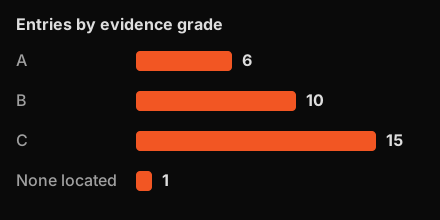
Grades are not uniform across this document. Part A (programming) and the protein entries in Part B rest on randomised-trial meta-analyses and mostly grade A–B. The technique entries (BB-T-*) are acute biomechanical and EMG studies — they describe mechanical stimulus, not proven long-term hypertrophy differences, and grade C almost throughout. The injury entries (BB-I-*) are retrospective and cross-sectional epidemiology and also grade C. Treat a C-grade row as "this is the best available evidence," not "this is established."
What the app prescribes
— Part A (Programming)
| id | variable | unit | min | default | max | evidence_grade | applies_to | source_ids |
|---|---|---|---|---|---|---|---|---|
| BB-P-01 | Weekly volume per muscle | direct sets/muscle/wk | 4 | 10 | 30 | A | trained + untrained | 1,2,3 |
| BB-P-02 | Frequency per muscle | sessions/muscle/wk | 1 | 2 | 3 | A | trained + untrained | 2,3,4,5 |
| BB-P-03 | Load | % 1RM | 30 | 70 | 85 | A | trained + untrained | 3,6,7 |
| BB-P-03b | Repetition range | reps/set | 5 | 8 | 30 | A | trained + untrained | 3,6,7 |
| BB-P-04 | Proximity to failure | RIR | 0 | 1 | 3 | A | trained + untrained | 8,9,10,11 |
| BB-P-05 | Inter-set rest | seconds | 60 | 120 | 300 | B | trained + untrained | 12,13 |
| BB-P-06 | Repetition duration | seconds/rep | 0.5 | 3 | 8 | B | trained + untrained | 14,15 |
| BB-P-07 | Range of motion | qualitative | partial | full | full | B | trained + untrained | 16,17 |
| BB-P-08 | Exercise variation | changes/mesocycle | 0 | 1 | 2 | C | young men only | 18 |
| BB-P-09 | Exercise order | qualitative | any | priority-first | any | B | trained + untrained | 19,20 |
| BB-P-10 | Set structure | qualitative | straight | straight | advanced | B | recreationally trained | 21 |
| BB-P-11 | Periodization | qualitative | none | none | any model | A | trained + untrained | 20,22 |
| BB-P-12 | Deload / break tolerance | weeks off | 0 | 1 | 10 | C | untrained evidence base | 23,24 |
| BB-P-13 | Sex modifier | multiplier | 1.0 | 1.0 | 1.0 | B | young–middle-aged adults | 25,26 |
Notes on defaults. BB-P-08 default of 1 change per mesocycle is an interpretation of "systematic, infrequent variation" — the literature does not quantify a rate, so treat this cell as the weakest in the table. BB-P-12 max of 10 weeks reflects the longest detraining period tested in [23], not a recommendation. BB-P-13 multiplier of 1.0 encodes the finding of no sex difference in hypertrophy.
Structured Parameter Table — Part B (Nutrition)
| id | variable | unit | min | default | max | evidence_grade | applies_to | source_ids |
|---|---|---|---|---|---|---|---|---|
| BB-N-01 | Daily protein (maintenance) | g/kg body weight/day | 1.4 | 1.6 | 2.0 | A | trained adults | 26,27,28,29 |
| BB-N-02 | Protein per meal | g/kg body mass/dose | 0.25 | 0.30 | 0.40 | B | trained adults | 29,30 |
| BB-N-02b | Meal frequency | meals/day | 3 | 4 | 6 | B | trained adults | 29,30,31 |
| BB-N-02c | Pre-sleep casein | g | 30 | 35 | 40 | B | trained adults | 29,30 |
| BB-N-03 | Energy surplus | — | — | not established | — | C | trained adults | 32 |
| BB-N-04 | Rate of weight loss | % body weight/wk | 0.5 | 0.7 | 1.0 | B | lean trained athletes | 31,32,33 |
| BB-N-05 | Daily protein (deficit) | g/kg fat-free mass/day | 2.3 | 2.6 | 3.1 | B | lean trained adults | 29,31,32,34 |
| BB-N-06 | Training volume in deficit | sets/exercise | 3 | 3 | 5 | C | trained males | 35 |
| BB-N-07 | Dietary fat | % of calories | 15 | 20 | 30 | C | competitive bodybuilders | 31,36 |
| BB-N-09 | Reps per muscle per session (prep) | reps | 40 | 55 | 70 | C | natural competitors | 38 |
Note. BB-N-05 is denominated in fat-free mass, not body weight — see the caveat in that entry.
The entries
BB-P-01Weekly volume per muscle group
Prescription≥10 direct sets per muscle per week as the working default; meaningful growth occurs from ~4 sets/week upward, and gains continue past 20+ sets/week with progressively diminishing returns.
Evidence gradeA
EffectEach additional weekly set ≈ +0.023 ES, ≈ +0.37% muscle size gain; higher- vs lower-volume within-study ES difference 0.241 ≈ 3.9% gain difference (34 treatment groups, 15 studies) [1]. Meta-regression across 67 studies / 2058 participants: posterior probability that the volume→hypertrophy slope exceeds zero = 100%, with diminishing returns [2].
PopulationTrained and untrained; [2] pooled 79.1% male, mean age 25.2 ± 5.2 y.
Caveats[2] found that classifying sets as direct vs indirect (fractional counting — indirect sets counted as 0.5) fit the data best. Volume counts that ignore indirect work will overstate the dose. No true upper plateau has been located; the curve flattens rather than reversing in the analysed range.
BB-P-02Training frequency per muscle group
Prescription2 sessions per muscle per week as the default. Frequency is primarily a tool for distributing weekly volume, not an independent growth driver.
Evidence gradeA
EffectNon-volume-equated comparison favoured higher frequency (ES 0.49 ± 0.08 vs 0.30 ± 0.07) [4]. When volume is equated, no significant frequency effect on hypertrophy across 25 studies [5]. In meta-regression, the posterior probability for a frequency→hypertrophy effect was <100%, i.e. compatible with negligible effect [2]. Highest-ranked hypertrophy prescription in a 119-study Bayesian network meta-analysis was higher-load, multi-set, twice-weekly (SMD 0.66, 95% CrI 0.47–0.85 vs no-exercise control) [3].
PopulationHealthy adults, trained and untrained; [3] hypertrophy network n = 3364, 47% women.
CaveatsThe apparent frequency benefit in [4] is largely a volume artefact — higher frequency added volume. Once volume is held constant the effect disappears [5]. Frequency matters when a session's per-muscle volume becomes too large to complete with quality.
BB-P-03Load and repetition range
Prescription30–85% 1RM all produce hypertrophy. Anchor the majority of work at 60–80% 1RM (≈6–12 reps); use lighter loads freely for isolation and joint-sparing work.
Evidence gradeA
EffectAcross 21 studies, hypertrophy changes were similar between low load (≤60% 1RM) and high load (>60% 1RM) when all sets went to momentary failure; 1RM strength gains significantly favoured high load [6]. An earlier meta-analysis found a non-significant trend favouring high load for hypertrophy (ES 0.82 ± 0.17 vs 0.39 ± 0.17; difference 0.43 ± 0.24, p = 0.076) [7]. A 119-study network meta-analysis concluded all prescriptions comparably promoted hypertrophy [3].
PopulationHealthy adults; [7] noted findings strongest in untrained participants.
CaveatsThe low-load equivalence in [6] holds only because all sets were taken to momentary failure. Low-load training stopped short of failure has not been shown equivalent. Low-load sets also carry far higher discomfort and time cost per set.
BB-P-04Proximity to failure
Prescription0–3 RIR, with most sets at 1–2 RIR. Closer to failure is modestly better for hypertrophy; failure is not required.
Evidence gradeA
EffectMeta-analysis of 15 studies: trivial advantage for set failure vs non-failure (ES 0.19, 95% CI 0.00–0.37, p = 0.045); the momentary muscular failure subgroup was non-significant (ES 0.12, 95% CI −0.13 to 0.37, p = 0.343) [8]. Continuous meta-regression: hypertrophy increased as sets terminated closer to failure (negative marginal slope, CI excluding null) [9]. An 8-week RCT in trained lifters found near-identical quadriceps growth for failure vs 1–2 RIR (0.181 cm vs 0.182 cm) [10]. A single-set 8-week RCT found hypertrophy tended to favour failure, with modest absolute differences [11].
PopulationTrained and untrained adults; [10] n = 18 trained (12 M, 6 F); [11] n = 42 trained.
CaveatsRIR in [9] was estimated by the authors from study descriptions, not measured — the authors themselves call the analysis exploratory and caution against precise interpretation. [8] found no advantage for higher velocity-loss thresholds, suggesting the proximity-to-failure/hypertrophy relationship may be non-linear rather than monotonic. Training to failure raises per-set fatigue cost, which constrains achievable weekly volume (see BB-P-01).
BB-P-05Inter-set rest interval
Prescription≥60 s; default 90–180 s. Extending beyond ~90 s yields no further detectable hypertrophy benefit.
Evidence gradeB
EffectBayesian meta-analysis of 9 studies / 19 measurements: short 0.48 (95% CrI 0.19–0.81) vs longer 0.56 (95% CrI 0.24–0.86) — substantial overlap. Controlled pairwise estimates marginally favoured longer rest at arm 0.13 (95% CrI −0.27 to 0.51) and thigh 0.17 (95% CrI −0.13 to 0.43); whole body marginally favoured shorter, −0.08 (95% CrI −0.45 to 0.29) [12].
PopulationHealthy adults.
CaveatsAll credible intervals cross zero — this is a small, uncertain effect with substantial heterogeneity. The proposed mechanism is that short rest suppresses volume load, so the rest interval matters mainly through its effect on the volume you can actually complete. Whether you train to failure did not meaningfully change the rest-interval interaction [12].
BB-P-06Repetition duration / tempo
Prescription0.5–8 s total repetition duration. Do not deliberately train slower than ~10 s per rep.
Evidence gradeB
EffectAcross 8 studies, hypertrophy outcomes were similar for repetition durations spanning 0.5–8 s; volitionally very slow durations (>10 s/rep) appear inferior [14].
PopulationHealthy adults, sets taken to failure.
CaveatsThe >10 s inferiority rests on few controlled studies. A later review [15] notes the literature does not provide equivocal evidence and that no analysis has isolated eccentric vs concentric phase duration on chronic adaptation — so "tempo prescriptions" beyond the broad range above are not evidence-backed.
BB-P-07Range of motion and muscle length
PrescriptionFull ROM as the default for every exercise.
Evidence gradeB
EffectMeta-analysis of 16 studies: full ROM produced greater strength (ES 0.56, p = 0.004) and greater lower-limb hypertrophy (ES 0.88, p = 0.027) than partial ROM; no significant difference for muscle thickness, pennation angle, or fascicle length (ES 0.28, p = 0.226) [16].
PopulationHealthy adults.
CaveatsThe popular claim that training at longer muscle lengths preferentially drives regional growth is not well supported. A 12-study Bayesian meta-analysis found trivial regional differences — proximal SMD 0.05 (95% QI −0.07 to 0.16), mid-belly 0.07 (−0.02 to 0.15), distal 0.09 (−0.01 to 0.19) — with a high proportion of the posterior inside the region of practical equivalence, and the studies differed by only ~21.8% mean muscle length on average [17]. There is a directional trend toward distal sites, but it is not an established effect.
BB-P-08Exercise selection and variation
PrescriptionKeep a stable core of exercises; vary systematically on anatomical/biomechanical grounds, not randomly, and not frequently.
Evidence gradeC
EffectSystematic review of 8 studies (N = 241, all young men): some systematic variation appears to enhance regional hypertrophy and dynamic strength, whereas excessive or random variation, and redundant exercises that provide the same stimulus, may compromise gains [18].
PopulationYoung men only — no data in women or older adults.
Sources[18]
CaveatsNarrative synthesis, no pooled effect size. "Excessive" is not quantified anywhere in the literature.
BB-P-09Exercise order
PrescriptionPlace the exercises whose strength matters most at the start of a session. For hypertrophy alone, order is not a meaningful variable.
Evidence gradeB
EffectMeta-analysis of 11 studies: no overall order effect on strength across all tests (ES −0.11, p = 0.306), but strength gains in multi-joint exercises favoured performing them first (ES 0.32, p = 0.034) and gains in single-joint exercises favoured performing those first (ES −0.58, p = 0.032). No hypertrophy effect (ES 0.03, p = 0.862) [19].
PopulationHealthy adults.
Sources[19]
CaveatsThe effect is "whatever comes first improves most," not "compounds first is better." An umbrella review classed exercise order as having insufficient evidence for hypertrophy specifically [20].
BB-P-10Set structure and advanced techniques
PrescriptionStraight sets are the default. Rest-pause, drop sets, and cluster sets are acceptable time-efficiency tools; do not expect them to out-grow straight sets at matched volume and effort.
Evidence gradeB
EffectMeta-analysis of 23 studies in recreationally trained adults: advanced systems produced a small pooled advantage (g = 0.159); strength favoured advanced methods moderately (g = 0.351) but hypertrophy did not differ significantly (g = 0.046). Rest-pause showed a modest hypertrophic advantage; drop sets, tempo-controlled, and cluster protocols were equivalent to traditional sets when volume and effort were matched [21].
PopulationRecreationally trained adults aged 18–45.
Sources[21]
CaveatsBetween-study heterogeneity was near zero (τ² ≈ 0), which is unusually low and worth noting. The authors explicitly reject the claim of hypertrophic superiority at the aggregate level.
BB-P-11Periodization for hypertrophy
PrescriptionNo specific periodization model is required for hypertrophy. Organise training around volume progression and recovery instead.
Evidence gradeA
EffectIn volume-equated designs across 35 studies, hypertrophy did not differ between periodized and non-periodized training (ES 0.13, 95% CI −0.10 to 0.36, p = 0.27), nor between linear and undulating periodization (ES 0.05, 95% CI −0.20 to 0.29, p = 0.72) [22]. An umbrella review of 44 systematic reviews likewise found insufficient evidence that periodization influences muscle mass [20].
PopulationTrained and untrained.
CaveatsThis is a genuinely null result, and it is one of the better-evidenced null results in the field. Periodization does matter for maximal strength (see the companion powerlifting file, PL-P-07) — the two goals diverge here.
BB-P-12Deload, detraining, and retraining
PrescriptionShort training breaks are not costly over the long run. Deloads may be programmed for fatigue management without an expected hypertrophy penalty.
Evidence gradeC
EffectIn a 30-week RCT (n = 42 completing), a group doing 10 weeks training / 10 weeks detraining / 10 weeks retraining finished with strength and cross-sectional area equivalent to a group doing 20 continuous weeks. Strength and size fell during detraining but regained rapidly — during the first 5 weeks of retraining, gains in leg-press 1RM and vastus lateralis and biceps brachii CSA exceeded the matched period in the continuous group (p < 0.01) [23].
Population[23] was untrained participants (age 32 ± 5, 45% female) — this is the main limitation for applying it to trained lifters.
CaveatsMyonuclear permanence after training has been confirmed in humans — myonuclei were retained through 16 weeks of detraining, leaving 33% more myonuclei in type 2 fibres than the control limb — but this did not translate into clearly superior retraining hypertrophy, and the authors state the physiological benefit remains undetermined [24]. Do not program on the assumption that "muscle memory" guarantees faster regain.
BB-P-13Training age and sex
PrescriptionUse identical programming variables for men and women. Expect the same relative hypertrophy.
Evidence gradeB
EffectMeta-analysis: no sex difference in hypertrophy (ES 0.07 ± 0.06, p = 0.31, I² = 0, 12 outcomes from 10 studies); no difference in lower-body strength (ES −0.21 ± 0.16, p = 0.20); relative upper-body strength gains favoured females (ES −0.60 ± 0.16, p = 0.002, I² = 72.1) [25].
PopulationYoung to middle-aged adults on identical protocols.
CaveatsHeterogeneity for the upper-body strength finding was high (I² = 72.1) and the authors suggest it may be an artefact of short study durations in untrained participants. Separately, training experience increases the efficacy of protein supplementation while increasing age reduces it [26].
# PART B — Nutrition, Technique, Injury
BB-N-01Total daily protein
Prescription1.6 g/kg body weight/day covers the hypertrophy requirement. 1.4–2.0 g/kg/day is a reasonable working band. Intakes above ~1.6 g/kg/day confer no further lean-mass benefit at maintenance calories.
Evidence gradeA
EffectBreak-point analysis across 49 RCTs (n = 1863): supplementation beyond a total intake of 1.62 g/kg/day produced no further gains in fat-free mass; overall FFM effect +0.30 kg (95% CI 0.09–0.52) and 1RM +2.49 kg (95% CI 0.64–4.33) [26]. A 105-article dose-response meta-analysis (n = 5402) found lean mass increased 0.39 kg (95% CI 0.36–0.41) per 0.1 g/kg/day below 1.3 g/kg/day but only 0.12 kg (95% CI 0.11–0.14) above it [27]. For strength, an 82-article dose-response meta-analysis found +0.72% (95% CI 0.40–1.04) per 0.1 g/kg/day up to 1.5 g/kg/day, with no further gains beyond [28]. ISSN position: 1.4–2.0 g/kg/day is sufficient for most exercising individuals [29].
PopulationHealthy adults; effects larger in resistance-trained individuals and smaller with increasing age [26].
CaveatsThe three breakpoints (1.3, 1.5, 1.62 g/kg/day) come from different outcomes and models and should be read as a zone, not competing precise values. Protein requirements rise in an energy deficit — see BB-N-04.
BB-N-02Protein distribution and timing
Prescription0.25–0.40 g/kg body mass per meal (≈20–40 g), spread across 3–6 meals every 3–4 h. Optionally 30–40 g casein pre-sleep. Peri-workout timing is not a priority.
Evidence gradeB
EffectISSN position stands: 20–40 g doses (0.25–0.40 g/kg/dose) every 3–4 h most favourably affect muscle protein synthesis rates; doses should contain 700–3000 mg leucine; pre-sleep casein (~30–40 g) acutely increases overnight MPS and metabolic rate without influencing lipolysis; the anabolic effect of a training session lasts at least 24 h [29][30].
PopulationHealthy exercising adults.
CaveatsThese are position stands built largely on acute MPS measurements, not long-term hypertrophy RCTs — the inferential chain from acute MPS to chronic growth is not proven. Contest-prep review [31] states directly that alterations in nutrient timing and frequency appear to have little effect on fat loss or lean mass retention.
BB-N-03Energy surplus for lean gain
PrescriptionA sustained caloric surplus is required to maximise lean mass accrual. The optimal magnitude is not established by the literature — see caveats.
Evidence gradeC
EffectISSN position: diets focused on accruing lean mass are driven by a sustained caloric surplus; the composition and magnitude of the surplus and the training status of the subject influence the nature of the gains [32].
PopulationResistance-training adults.
Sources[32]
CaveatsThis is the weakest-evidenced prescriptive area in this file. No meta-analysis establishes an optimal surplus rate, and commonly circulated figures (e.g. "+300–500 kcal" or "0.25–0.5% body weight/week") are not traceable to a controlled dose-response trial. See the Contested section.
BB-N-04Rate of weight loss and lean mass retention
Prescription0.5–1.0% body weight per week; prefer the slower end (~0.7%/wk) when already lean.
Evidence gradeB
EffectRCT in 24 elite athletes: a slow-reduction group losing 0.7%/wk gained 2.1% ± 0.4% lean body mass (p < 0.001), while a fast-reduction group at 1.4%/wk was unchanged (−0.2% ± 0.7%); between-group difference p < 0.01. Both groups lost similar total body weight; energy intake was reduced 19% ± 2% vs 30% ± 4% [33]. Evidence-based contest-prep review recommends 0.5–1%/wk to maximise muscle retention [31]. ISSN position: the higher the baseline body fat, the more aggressively the deficit may be imposed; slower rates better preserve lean mass in leaner subjects [32].
Population[33] elite athletes across sports, 4 resistance sessions/wk.
Caveats[33] is a single RCT with n = 24 and unequal intervention durations (8.5 vs 5.3 weeks). The leanness-dependence in [32] is a position-stand judgement, not a quantified dose-response.
BB-N-05Protein during an energy deficit
PrescriptionRaise protein to 2.3–3.1 g/kg fat-free mass per day while dieting.
Evidence gradeB
EffectISSN position: higher protein intakes of 2.3–3.1 g/kg FFM may be required to maximise lean mass retention in lean, resistance-trained subjects under hypocaloric conditions [32][29]. RCT (n = 40, 4 weeks, ~40% energy deficit): 2.4 g/kg/day produced greater lean mass gain and fat mass loss than 1.2 g/kg/day when combined with resistance and high-intensity training [34]. Contest-prep review recommends 2.3–3.1 g/kg lean body mass [31].
PopulationYoung resistance-trained men in [34]; lean trained subjects in [32].
Caveats[34] used a severe 40% deficit and a very high training load over only 4 weeks in young men — it demonstrates the direction of the effect, not a general prescription. Note the denominator: these figures are per kg of fat-free mass or LBM, not total body weight, and confusing the two will overshoot substantially in higher-body-fat individuals.
BB-N-06Training volume during an energy deficit
PrescriptionDo not add volume to protect muscle while dieting. Moderate volume is sufficient.
Evidence gradeC
EffectRCT in 38 resistance-trained males over 6 weeks at 30 kcal/kg with protein fixed at 2.8 g/kg FFM: 5 sets/exercise vs 3 sets/exercise produced no significant group × time interaction for rectus femoris muscle thickness, body composition, contractility, sleep, or mood. Lean mass decreased in both groups (−0.51 ± 2.30 kg vs −0.92 ± 1.59 kg) with no between-group difference (p = 0.966) [35].
PopulationResistance-trained males.
Sources[35]
CaveatsSingle trial, 6 weeks, males only, moderate deficit. Conclusion is that higher volume has "neither an advantage nor disadvantage" — a null, not a demonstration that volume is irrelevant.
BB-N-07Carbohydrate availability
PrescriptionAvoid sustained low-carbohydrate availability during a hypertrophy phase. Set fat at 15–30% of calories and allocate remaining calories to carbohydrate.
Evidence gradeC
EffectReview evidence: carbohydrate restriction increases branched-chain amino acid oxidation and reduces myogenic regulatory factor transcription; maintained 8–12 weeks, the resulting changes in anabolic signalling, protein synthesis, and myogenesis likely contribute to limited hypertrophic response. Blunted hypertrophy does not appear to affect strength, but persistently low muscle glycogen impairs anaerobic output [36]. Contest-prep review: 15–30% of calories from fat, remainder from carbohydrate [31].
PopulationAthletes and resistance-training adults.
Caveats[36] is a narrative review of mechanism, not a meta-analysis of hypertrophy outcomes — the causal chain is described by its own authors as "likely." Strength appears preserved even when hypertrophy is blunted.
BB-N-08Contest preparation: energetics and adaptive thermogenesis
FindingResting energy expenditure and appetite/thyroid hormones shift measurably during contest prep, and these shifts appear largely reversible.
Evidence gradeC
EffectIn drug-free physique athletes (23 competing, 20 non-dieting controls) tested 23 weeks pre-competition, 1 week pre-competition, and 23 weeks post: both sexes showed reductions in fat mass and subcutaneous fat and changes in REE and hormones consistent with adaptive thermogenesis. Responses "seemed temporary as they returned toward baseline after the recovery phase." Controls showed no systematic change [37].
PopulationDrug-free male and female physique athletes.
CaveatsSingle cohort study. Two safety points from the contest-prep literature carry more weight than any programming detail here: dehydration and electrolyte manipulation in the final days before competition can be dangerous and may not improve appearance, and competitors in aesthetic sport face increased risk of eating and body image disorders and should have access to appropriate mental health professionals [31].
BB-N-09Contest-preparation training parameters
PrescriptionMaintain resistance training through the deficit: ≥2 sessions/muscle/week, most reps in the 6–12 range at 70–80% 1RM, ~40–70 reps per muscle group per session, 1–3 min rest, 1–2 s concentric / 2–3 s eccentric. Limit failure training on heavy compound lifts; reserve it for single-joint and higher-rep work. Use the lowest frequency and duration of cardiovascular training that still achieves the required fat loss.
Evidence gradeC
EffectConsolidated recommendations from a literature review specific to natural bodybuilding contest preparation [38]; block and undulating periodization models "show promise."
PopulationNatural (drug-free) competitive bodybuilders.
Sources[38]
CaveatsThis is a narrative review producing expert recommendations, not a meta-analysis — graded C accordingly. Interference from concurrent cardiovascular training increases with its frequency and duration; full-body modalities or cycling may reduce interference. Fasted cardio has no demonstrated benefit over fed-state and "could be detrimental" [38].
BB-T-01Range of motion as an execution variable
FindingFull ROM outperforms partial ROM for lower-limb hypertrophy and strength; regional differences from muscle-length manipulation are trivial.
Evidence gradeB (this entry is the exception — it rests on training-intervention meta-analyses, not acute work)
Sources[16][17] — see BB-P-07 for full effect sizes and caveats.
BB-T-02Squat stance width
FindingNarrow stance increases quadriceps/vastii demand; wide stance increases posterior-chain and hip demand. Neither is "optimal" — they load different tissue.
Evidence gradeC
EffectIn a two-experiment study (n = 70 habitual, n = 20 manipulated, squats at 70% 1RM), narrow stance produced significantly greater peak power and greater quadriceps forces, while wide stance significantly increased posterior-chain muscle forces and medial ground-reaction-force impulse [39]. At 70% and 85% 1RM to parallel, narrow stance produced significantly greater knee flexion angle (d = 2.56–2.86) while wide stance produced greater hip-to-knee extension net joint moment ratios and knee adduction moments (d = 0.51–1.41) [40]. In 3RM back squats, wide stance (1.7× acromion width) produced smaller knee extension net joint moments (d = 1.45) and smaller vastii forces (d = 1.3) than narrow (0.7× acromion width) [41].
Population[39] n = 90 lifters; [40] n = 14 amateur rugby athletes; [41] n = 12 recreationally trained men.
CaveatsSmall samples, muscle forces estimated by musculoskeletal modelling and static optimisation rather than measured. [39] states plainly that "there is not an optimal stance width."
BB-T-03Squat depth
FindingDeep squats do not increase injury risk to passive knee or spinal tissue relative to partial squats, provided technique is learned properly and load progresses gradually.
Evidence gradeC
EffectReview of 164+ articles: peak retropatellar compressive force and stress occur around 90° knee flexion; with increasing flexion the "wrapping effect," cranial displacement of facet contact areas, and enlargement of the retropatellar articulating surface reduce retropatellar compressive stress. Concerns about higher risk of chondromalacia, osteoarthritis, and osteochondritis from deep squats are described as unfounded. Half and quarter squats loaded with the correspondingly supra-maximal loads are argued to favour degenerative change in knee and spinal joints over the long term [42].
PopulationN/A — biomechanical and cadaveric literature review.
Sources[42]
CaveatsNarrative review of biomechanical modelling and cadaver data, not prospective injury surveillance. The review itself notes there are no realistic estimates of knee-joint forces beyond 50° flexion in the deep squat. The conditional matters: "provided that technique is learned accurately under expert supervision and with progressive training loads."
BB-T-04Bench press grip width
FindingWider grips permit heavier 1RM loads; narrower and medium grips increase triceps medialis activity.
Evidence gradeC
EffectIn 14 trained males performing 1RM at three grip widths: loads lifted were 109.8 ± 24.5 kg (wide), 108.9 ± 26.4 kg (medium), 103.7 ± 24 kg (narrow). Wide grip produced 13.1–15.7% laterally directed force; medium and narrow produced 0.4–1.8% and 8.5–10.1% medially directed force respectively (as a proportion of vertical force during the sticking region). Triceps medialis activity was greater for medium and narrow than wide [43].
Populationn = 14 recreationally trained males.
Sources[43]
Caveatsn = 14, single session, males only. The load difference between wide and medium (0.9 kg) is trivial; only narrow was meaningfully lower.
BB-T-05Deadlift variation
FindingConventional and sumo load the hip extensors more near lockout; hex-bar shifts demand toward the knee extensors and permits higher barbell velocity.
Evidence gradeC
EffectIn 11 strength-trained women performing 3RM (conventional 103.18 ± 18.47 kg, sumo 101.54 ± 15.01 kg, hex-bar 99.70 ± 15.94 kg): conventional and sumo produced larger hip net joint moments near lockout; hex-bar produced greater barbell velocity, greater knee net joint moments, and increased hip and knee flexion angles [44].
Populationn = 11 resistance-trained women.
Sources[44]
Caveatsn = 11, single session. This is one of very few biomechanical deadlift studies in women, which is a strength of the study and a sign of how thin the deadlift literature is overall.
BB-T-06Systematic vs random exercise variation
FindingSee BB-P-08. Variation should be justified by anatomy and biomechanics; redundant or frequently rotated exercises may hinder adaptation [18].
Evidence gradeC
BB-I-01Injury rates in bodybuilding
FindingBodybuilding has the lowest injury rate of the weight-training sports.
Evidence gradeC
EffectSystematic review of 20 studies across weightlifting, powerlifting, bodybuilding, strongman, Highland Games, and CrossFit: bodybuilding 0.12–0.7 injuries per lifter per year, or 0.24–1 injury per 1000 h — compared with strongman at 4.5–6.1 and Highland Games at 7.5 injuries per 1000 h [45].
PopulationCompetitive athletes across weight-training sports.
CaveatsOnly 5 of 20 studies scored ≥75% on risk-of-bias assessment; only 4 used a prospective design. A separate systematic review of 28 studies reported resistance-training injury incidence spanning 0.21–18.9 per 1000 h and prevalence 10–82% across methods, concluding traditional strength training is the safest resistance-training method and strongman the least safe — while noting that few studies rated highly and generalisation is difficult [46].
BB-I-02Common injury sites and types
FindingShoulder, lower back, knee, elbow, and wrist/hand are the most commonly injured locations; strains, tendinitis, and sprains are the most common types.
Evidence gradeC
EffectConsistent across the weight-training sports [45]. Very few significant differences in injury outcomes were observed as a function of age, sex, competitive standard, or bodyweight class [45].
Sources[45]
CaveatsPredominantly retrospective designs with varying injury definitions.
BB-I-03Shoulder injury
FindingShoulder injury is common in weight-lifting athletes regardless of age or sex; anterior instability and overuse are the most common types.
Evidence gradeC
EffectScoping review: contributing intrinsic and extrinsic factors include incorrect technique implementation, age, vulnerable shoulder positioning during the lift, and overtraining leading to overuse injury [47].
Sources[47]
CaveatsScoping review with varying incidence rates across included studies; no pooled estimate and no established causal risk factors.
BB-I-04Load management and return to training
FindingInsufficient evidence. No systematic review or controlled trial identified in this search establishes evidence-based return-to-lifting progressions or load-management protocols for injured bodybuilders.
Evidence grade— (evidence absent)
Sourcesnone
CaveatsSee the Contested section. This gap is real and is stated rather than filled with plausible-sounding numbers.
What do lifters hear about building muscle that no trial supports?
Ten things, starting with an ideal calorie surplus and a weekly set ceiling. MVIII leaves every one of them out of the program.
- An optimal caloric surplus for lean gain. No dose-response trial establishes an optimal surplus magnitude or rate of weight gain. Figures like "+300–500 kcal/day" or "0.25–0.5% body weight per week" are practitioner heuristics, not findings. [32] confirms a surplus is needed and says the magnitude matters — it does not say what the magnitude should be.
- A volume ceiling. No meta-analysis has located the weekly set volume at which hypertrophy stops improving or reverses. [2] shows diminishing returns across the studied range but no plateau point. Prescriptions of a hard "maximum recoverable volume" are not evidence-based.
- Training at long muscle lengths as a superior hypertrophy stimulus. [17] found trivial regional differences across proximal, mid-belly, and distal sites, with most of the posterior distribution inside the region of practical equivalence. There is a directional trend, not an established effect — and the studies compared muscle lengths differing by only ~21.8% on average.
- Periodization for hypertrophy. Two independent lines of evidence [20][22] find no hypertrophy advantage for any periodization model in volume-equated designs. This is a well-supported null.
- Advanced techniques as superior growth tools. Pooled hypertrophy effect for advanced systems was g = 0.046 and non-significant [21]. They are time-efficiency tools, not growth multipliers.
- Nutrient timing around training. [31] states timing and frequency alterations appear to have little effect on fat loss or lean mass retention; the ISSN timing positions rest largely on acute MPS rather than chronic hypertrophy outcomes [30].
- Return-to-training protocols after injury. No evidence base was located for structured return-to-lifting progressions in this population. This is a genuine gap, not an oversight of this review.
- Specific tempo prescriptions. Beyond "0.5–8 s works, >10 s is worse" [14], no analysis has isolated eccentric vs concentric phase durations against chronic adaptation [15]. Prescriptions like "4-0-2-0" have no supporting outcome data.
- Progression models. No meta-analysis compares load progression against rep progression against set progression. This file therefore contains no
BB-Pentry prescribing a progression scheme, because there is nothing to cite. - Sex-specific programming. [25] found no hypertrophy difference between sexes on identical protocols. Programming women differently on physiological grounds is not supported for hypertrophy outcomes.
The 47 sources, checked 19 August 2026
- Schoenfeld BJ, Ogborn D, Krieger JW. Dose-response relationship between weekly resistance training volume and increases in muscle mass: a systematic review and meta-analysis. J Sports Sci. 2017;35(11):1073–1082. doi:10.1080/02640414.2016.1210197 https://doi.org/10.1080/02640414.2016.1210197
- Pelland JC, Remmert JF, Robinson ZP, Hinson SR, Zourdos MC. The resistance training dose response: meta-regressions exploring the effects of weekly volume and frequency on muscle hypertrophy and strength gains. Sports Med. 2026;56(2):481–505. doi:10.1007/s40279-025-02344-w https://doi.org/10.1007/s40279-025-02344-w
- Currier BS, McLeod JC, Banfield L, et al. Resistance training prescription for muscle strength and hypertrophy in healthy adults: a systematic review and Bayesian network meta-analysis. Br J Sports Med. 2023;57(18):1211–1220. doi:10.1136/bjsports-2023-106807 https://doi.org/10.1136/bjsports-2023-106807
- Schoenfeld BJ, Ogborn D, Krieger JW. Effects of resistance training frequency on measures of muscle hypertrophy: a systematic review and meta-analysis. Sports Med. 2016;46(11):1689–1697. doi:10.1007/s40279-016-0543-8 https://doi.org/10.1007/s40279-016-0543-8
- Schoenfeld BJ, Grgic J, Krieger J. How many times per week should a muscle be trained to maximize muscle hypertrophy? A systematic review and meta-analysis of studies examining the effects of resistance training frequency. J Sports Sci. 2019;37(11):1286–1295. doi:10.1080/02640414.2018.1555906 https://doi.org/10.1080/02640414.2018.1555906
- Schoenfeld BJ, Grgic J, Ogborn D, Krieger JW. Strength and hypertrophy adaptations between low- vs. high-load resistance training: a systematic review and meta-analysis. J Strength Cond Res. 2017;31(12):3508–3523. doi:10.1519/JSC.0000000000002200 https://doi.org/10.1519/JSC.0000000000002200
- Schoenfeld BJ, Wilson JM, Lowery RP, Krieger JW. Muscular adaptations in low- versus high-load resistance training: a meta-analysis. Eur J Sport Sci. 2016;16(1):1–10. doi:10.1080/17461391.2014.989922 https://doi.org/10.1080/17461391.2014.989922
- Refalo MC, Helms ER, Trexler ET, Hamilton DL, Fyfe JJ. Influence of resistance training proximity-to-failure on skeletal muscle hypertrophy: a systematic review with meta-analysis. Sports Med. 2023;53(3):649–665. doi:10.1007/s40279-022-01784-y https://doi.org/10.1007/s40279-022-01784-y
- Robinson ZP, Pelland JC, Remmert JF, et al. Exploring the dose-response relationship between estimated resistance training proximity to failure, strength gain, and muscle hypertrophy: a series of meta-regressions. Sports Med. 2024;54(9):2209–2231. doi:10.1007/s40279-024-02069-2 https://doi.org/10.1007/s40279-024-02069-2
- Refalo MC, Helms ER, Robinson ZP, Hamilton DL, Fyfe JJ. Similar muscle hypertrophy following eight weeks of resistance training to momentary muscular failure or with repetitions-in-reserve in resistance-trained individuals. J Sports Sci. 2024;42(1):85–101. doi:10.1080/02640414.2024.2321021 https://doi.org/10.1080/02640414.2024.2321021
- Hermann T, Mohan AE, Enes A, et al. Without fail: muscular adaptations in single-set resistance training performed to failure or with repetitions-in-reserve. Med Sci Sports Exerc. 2025;57(9):2021–2031. doi:10.1249/MSS.0000000000003728 https://doi.org/10.1249/MSS.0000000000003728
- Singer A, Wolf M, Generoso L, et al. Give it a rest: a systematic review with Bayesian meta-analysis on the effect of inter-set rest interval duration on muscle hypertrophy. Front Sports Act Living. 2024;6:1429789. doi:10.3389/fspor.2024.1429789 https://doi.org/10.3389/fspor.2024.1429789
- Grgic J, Schoenfeld BJ, Skrepnik M, Davies TB, Mikulic P. Effects of rest interval duration in resistance training on measures of muscular strength: a systematic review. Sports Med. 2018;48(1):137–151. doi:10.1007/s40279-017-0788-x https://doi.org/10.1007/s40279-017-0788-x
- Schoenfeld BJ, Ogborn DI, Krieger JW. Effect of repetition duration during resistance training on muscle hypertrophy: a systematic review and meta-analysis. Sports Med. 2015;45(4):577–585. doi:10.1007/s40279-015-0304-0 https://doi.org/10.1007/s40279-015-0304-0
- Wilk M, Zajac A, Tufano JJ. The influence of movement tempo during resistance training on muscular strength and hypertrophy responses: a review. Sports Med. 2021;51(8):1629–1650. doi:10.1007/s40279-021-01465-2 https://doi.org/10.1007/s40279-021-01465-2
- Pallarés JG, Hernández-Belmonte A, Martínez-Cava A, Vetrovsky T, Steffl M, Courel-Ibáñez J. Effects of range of motion on resistance training adaptations: a systematic review and meta-analysis. Scand J Med Sci Sports. 2021;31(10):1866–1881. doi:10.1111/sms.14006 https://doi.org/10.1111/sms.14006
- Varovic D, Wolf M, Schoenfeld BJ, Steele J, Grgic J, Mikulic P. Does muscle length influence regional hypertrophy? A systematic review and meta-analysis. Int J Sports Med. 2025;46(14):1027–1036. doi:10.1055/a-2615-4935 https://doi.org/10.1055/a-2615-4935
- Kassiano W, Nunes JP, Costa B, Ribeiro AS, Schoenfeld BJ, Cyrino ES. Does varying resistance exercises promote superior muscle hypertrophy and strength gains? A systematic review. J Strength Cond Res. 2022;36(6):1753–1762. doi:10.1519/JSC.0000000000004258 https://doi.org/10.1519/JSC.0000000000004258
- Nunes JP, Grgic J, Cunha PM, et al. What influence does resistance exercise order have on muscular strength gains and muscle hypertrophy? A systematic review and meta-analysis. Eur J Sport Sci. 2021;21(2):149–157. doi:10.1080/17461391.2020.1733672 https://doi.org/10.1080/17461391.2020.1733672
- McLeod JC, Currier BS, Lowisz CV, Phillips SM. The influence of resistance exercise training prescription variables on skeletal muscle mass, strength, and physical function in healthy adults: an umbrella review. J Sport Health Sci. 2024;13(1):47–60. doi:10.1016/j.jshs.2023.06.005 https://doi.org/10.1016/j.jshs.2023.06.005
- Tsartsapakis I, Zafeiroudi A, Kouthouris C. Effects of advanced resistance training systems on muscle hypertrophy and strength in recreationally trained adults: a systematic review and meta-analysis. J Funct Morphol Kinesiol. 2026;11(1):80. doi:10.3390/jfmk11010080 https://doi.org/10.3390/jfmk11010080
- Moesgaard L, Beck MM, Christiansen L, Aagaard P, Lundbye-Jensen J. Effects of periodization on strength and muscle hypertrophy in volume-equated resistance training programs: a systematic review and meta-analysis. Sports Med. 2022;52(7):1647–1666. doi:10.1007/s40279-021-01636-1 https://doi.org/10.1007/s40279-021-01636-1
- Halonen EJ, Gabriel I, Kelahaara MM, Ahtiainen JP, Hulmi JJ. Does taking a break matter — adaptations in muscle strength and size between continuous and periodic resistance training. Scand J Med Sci Sports. 2024;34(10):e14739. doi:10.1111/sms.14739 https://doi.org/10.1111/sms.14739
- Cumming KT, Reitzner SM, Hanslien M, et al. Muscle memory in humans: evidence for myonuclear permanence and long-term transcriptional regulation after strength training. J Physiol. 2024;602(17):4171–4193. doi:10.1113/JP285675 https://doi.org/10.1113/JP285675
- Roberts BM, Nuckols G, Krieger JW. Sex differences in resistance training: a systematic review and meta-analysis. J Strength Cond Res. 2020;34(5):1448–1460. doi:10.1519/JSC.0000000000003521 https://doi.org/10.1519/JSC.0000000000003521
- Morton RW, Murphy KT, McKellar SR, et al. A systematic review, meta-analysis and meta-regression of the effect of protein supplementation on resistance training-induced gains in muscle mass and strength in healthy adults. Br J Sports Med. 2018;52(6):376–384. doi:10.1136/bjsports-2017-097608 https://doi.org/10.1136/bjsports-2017-097608
- Tagawa R, Watanabe D, Ito K, et al. Dose-response relationship between protein intake and muscle mass increase: a systematic review and meta-analysis of randomized controlled trials. Nutr Rev. 2021;79(1):66–75. doi:10.1093/nutrit/nuaa104 https://doi.org/10.1093/nutrit/nuaa104
- Tagawa R, Watanabe D, Ito K, et al. Synergistic effect of increased total protein intake and strength training on muscle strength: a dose-response meta-analysis of randomized controlled trials. Sports Med Open. 2022;8(1):110. doi:10.1186/s40798-022-00508-w https://doi.org/10.1186/s40798-022-00508-w
- Jäger R, Kerksick CM, Campbell BI, et al. International Society of Sports Nutrition position stand: protein and exercise. J Int Soc Sports Nutr. 2017;14:20. doi:10.1186/s12970-017-0177-8 https://doi.org/10.1186/s12970-017-0177-8
- Kerksick CM, Arent S, Schoenfeld BJ, et al. International Society of Sports Nutrition position stand: nutrient timing. J Int Soc Sports Nutr. 2017;14:33. doi:10.1186/s12970-017-0189-4 https://doi.org/10.1186/s12970-017-0189-4
- Helms ER, Aragon AA, Fitschen PJ. Evidence-based recommendations for natural bodybuilding contest preparation: nutrition and supplementation. J Int Soc Sports Nutr. 2014;11:20. doi:10.1186/1550-2783-11-20 https://doi.org/10.1186/1550-2783-11-20
- Aragon AA, Schoenfeld BJ, Wildman R, et al. International Society of Sports Nutrition position stand: diets and body composition. J Int Soc Sports Nutr. 2017;14:16. doi:10.1186/s12970-017-0174-y https://doi.org/10.1186/s12970-017-0174-y
- Garthe I, Raastad T, Refsnes PE, Koivisto A, Sundgot-Borgen J. Effect of two different weight-loss rates on body composition and strength and power-related performance in elite athletes. Int J Sport Nutr Exerc Metab. 2011;21(2):97–104. doi:10.1123/ijsnem.21.2.97 https://doi.org/10.1123/ijsnem.21.2.97
- Longland TM, Oikawa SY, Mitchell CJ, Devries MC, Phillips SM. Higher compared with lower dietary protein during an energy deficit combined with intense exercise promotes greater lean mass gain and fat mass loss: a randomized trial. Am J Clin Nutr. 2016;103(3):738–746. doi:10.3945/ajcn.115.119339 https://doi.org/10.3945/ajcn.115.119339
- Roth C, Schwiete C, Happ K, Rettenmaier L, Schoenfeld BJ, Behringer M. Resistance training volume does not influence lean mass preservation during energy restriction in trained males. Scand J Med Sci Sports. 2023;33(1):20–35. doi:10.1111/sms.14237 https://doi.org/10.1111/sms.14237
- Margolis LM, Pasiakos SM. Low carbohydrate availability impairs hypertrophy and anaerobic performance. Curr Opin Clin Nutr Metab Care. 2023;26(4):347–352. doi:10.1097/MCO.0000000000000934 https://doi.org/10.1097/MCO.0000000000000934
- Isola V, Hulmi JJ, Petäjä P, Helms ER, Karppinen JE, Ahtiainen JP. Weight loss induces changes in adaptive thermogenesis in female and male physique athletes. Appl Physiol Nutr Metab. 2023;48(4):307–320. doi:10.1139/apnm-2022-0372 https://doi.org/10.1139/apnm-2022-0372
- Helms ER, Fitschen PJ, Aragon AA, Cronin J, Schoenfeld BJ. Recommendations for natural bodybuilding contest preparation: resistance and cardiovascular training. J Sports Med Phys Fitness. 2015;55(3):164–178. https://pubmed.ncbi.nlm.nih.gov/24998610/
- Sinclair J, Taylor PJ, Jones B, Butters B, Bentley I, Edmundson CJ. A multi-experiment investigation of the effects stance width on the biomechanics of the barbell squat. Sports (Basel). 2022;10(9):136. doi:10.3390/sports10090136 https://doi.org/10.3390/sports10090136
- Lahti J, Hegyi A, Vigotsky AD, Ahtiainen JP. Effects of barbell back squat stance width on sagittal and frontal hip and knee kinetics. Scand J Med Sci Sports. 2019;29(1):44–54. doi:10.1111/sms.13305 https://doi.org/10.1111/sms.13305
- Larsen S, Zee M, van den Tillaar R. The impact of stance width on kinematics and kinetics during maximum back squats. J Strength Cond Res. 2025;39(1):1–9. doi:10.1519/JSC.0000000000004949 https://doi.org/10.1519/JSC.0000000000004949
- Hartmann H, Wirth K, Klusemann M. Analysis of the load on the knee joint and vertebral column with changes in squatting depth and weight load. Sports Med. 2013;43(10):993–1008. doi:10.1007/s40279-013-0073-6 https://doi.org/10.1007/s40279-013-0073-6
- Larsen S, Gomo O, van den Tillaar R. A biomechanical analysis of wide, medium, and narrow grip width effects on kinematics, horizontal kinetics, and muscle activity on the sticking region in recreationally trained males during 1-RM bench pressing. Front Sports Act Living. 2020;2:637066. doi:10.3389/fspor.2020.637066 https://doi.org/10.3389/fspor.2020.637066
- Gundersen AH, van den Tillaar R, Falch HN, Fredriksen AB, Larsen S. A biomechanical comparison between conventional, sumo, and hex-bar deadlifts among resistance trained women. J Strength Cond Res. 2025;39(3):281–288. doi:10.1519/JSC.0000000000005011 https://doi.org/10.1519/JSC.0000000000005011
- Keogh JW, Winwood PW. The epidemiology of injuries across the weight-training sports. Sports Med. 2017;47(3):479–501. doi:10.1007/s40279-016-0575-0 https://doi.org/10.1007/s40279-016-0575-0
- Serafim TT, de Oliveira ES, Maffulli N, Migliorini F, Okubo R. Which resistance training is safest to practice? A systematic review. J Orthop Surg Res. 2023;18(1):296. doi:10.1186/s13018-023-03781-x https://doi.org/10.1186/s13018-023-03781-x
- Daher M, Jabre S, Casey JC, et al. Shouldering the load: a scoping review of incidence, types, and risk factors of shoulder injuries in weight-lifting athletes. Shoulder Elbow. 2025;17(3):254–263. doi:10.1177/17585732241258743 https://doi.org/10.1177/17585732241258743